You have 0 items in your cart

0
- Home
- Commercial Services
- Residential Services
- Buy Mulch Online
- Safety & Compliance
- Contact
Kagaru is about as quiet as our service area gets, so a search for “tree removal Kagaru” nearly always comes from a landholder. Dynamic Tree Solutions takes down dead and dangerous trees, clears fence lines and tracks, mulches regrowth and grinds stumps on rural properties here. Our Ellen Grove base is about 27 km to the north, past Flagstone. Our arborists hold AQF Level 3, the business is fully insured, and pruning on every property is done to AS 4373-2007.
The 2021 census counted 19 people in Kagaru. Most of the land is used for grazing on native vegetation, with some cropping in the north. Its eastern edge follows the Sydney to Brisbane railway, the Logan River and Teviot Brook, and the trains are about the only regular noise. The name comes from an Aboriginal word for the blue-winged kookaburra and was first given to a railway stop in 1930, built so steam engines could take on water.
So we write this page for the people who run the land. Quotes are free. Send photos and a map pin through the form to get things moving.
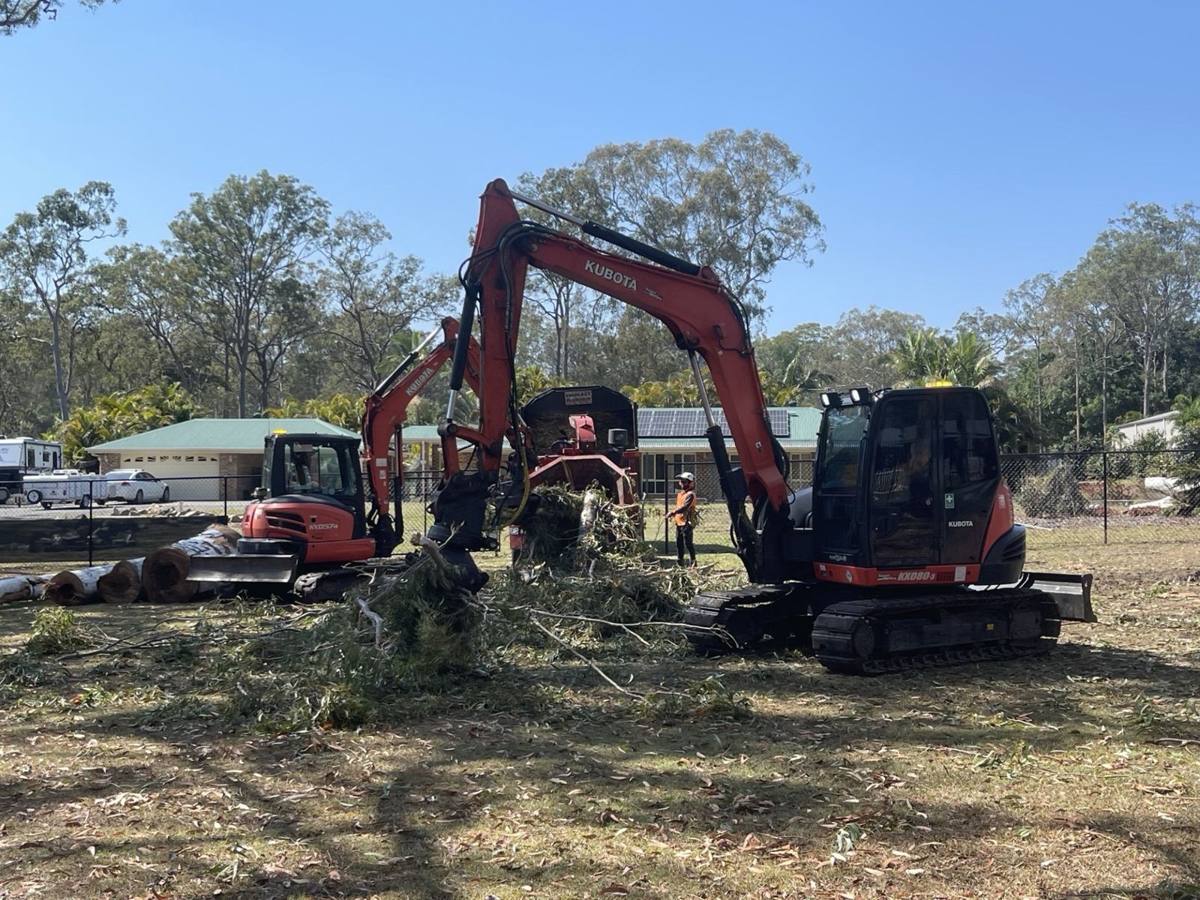
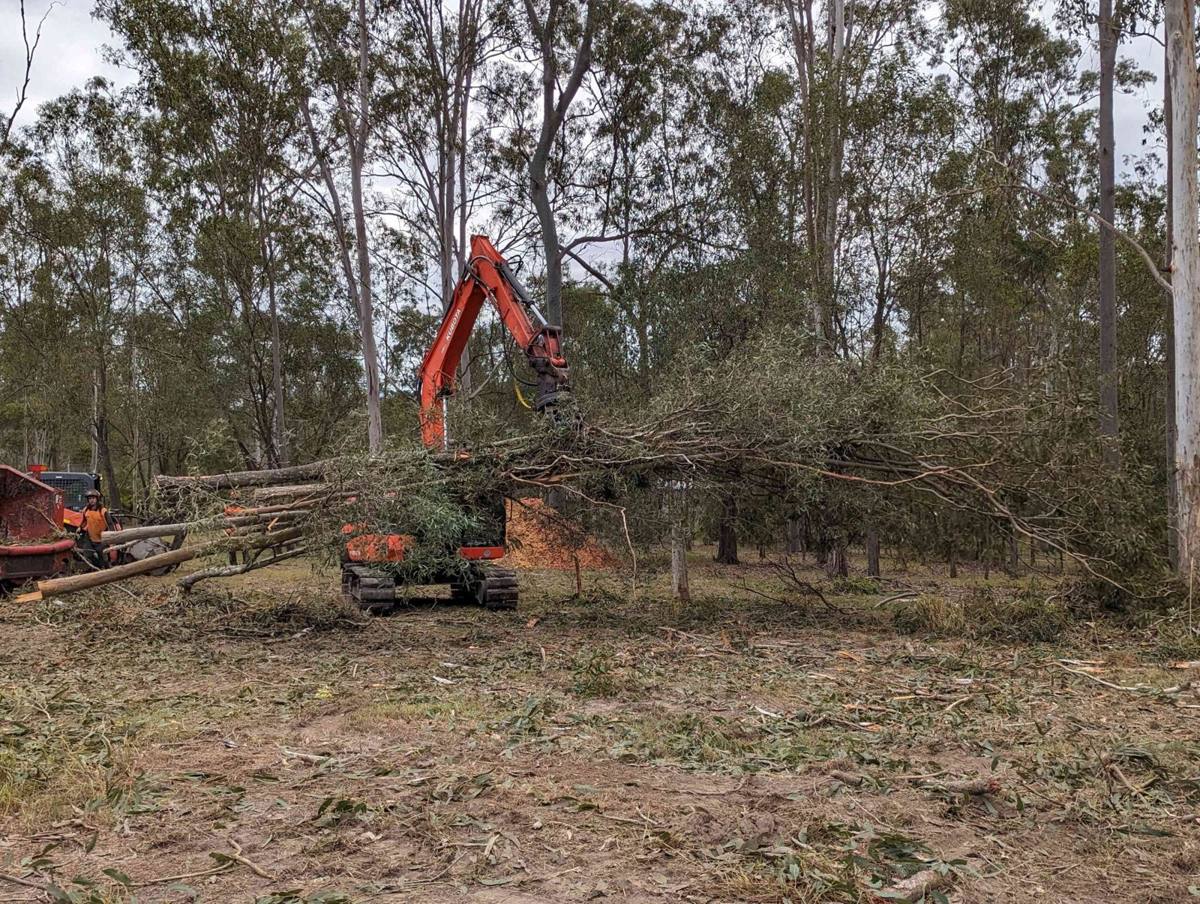
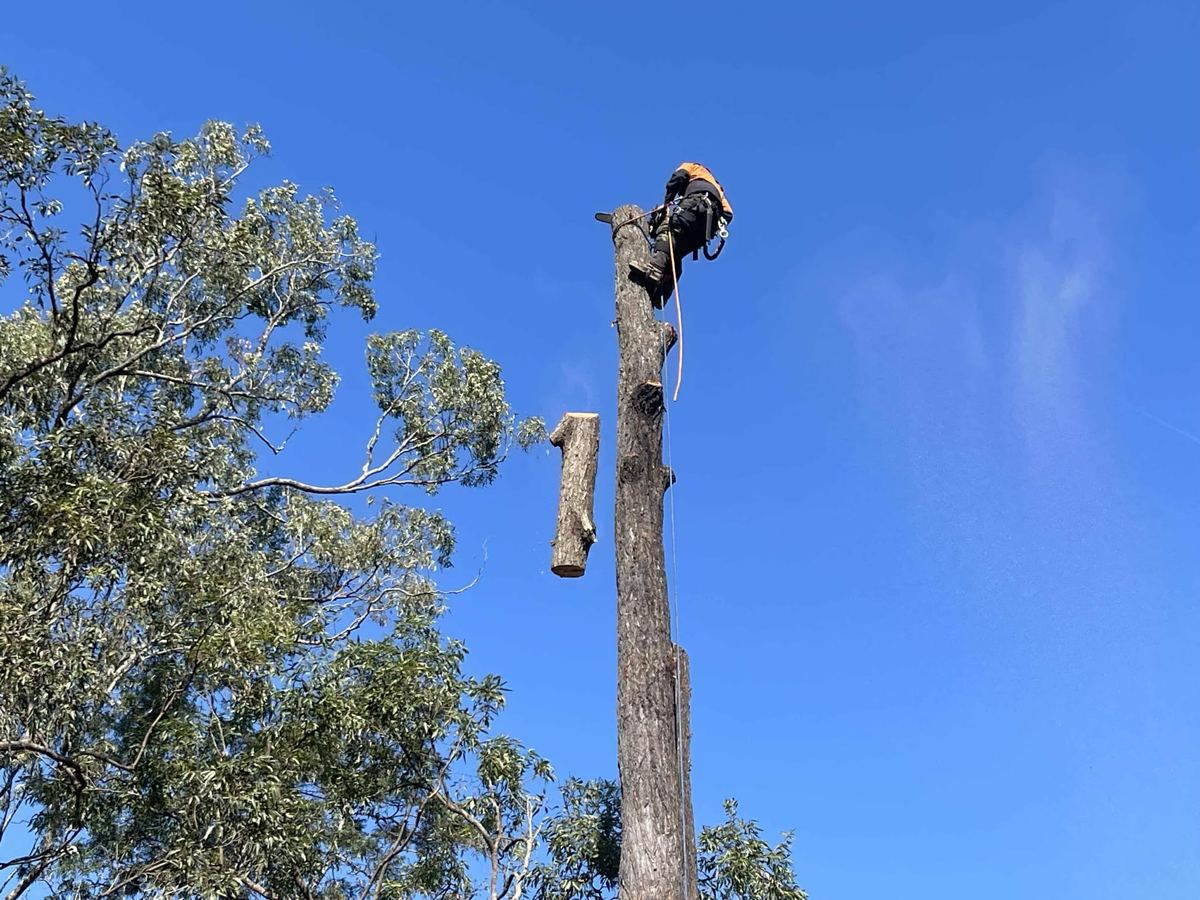
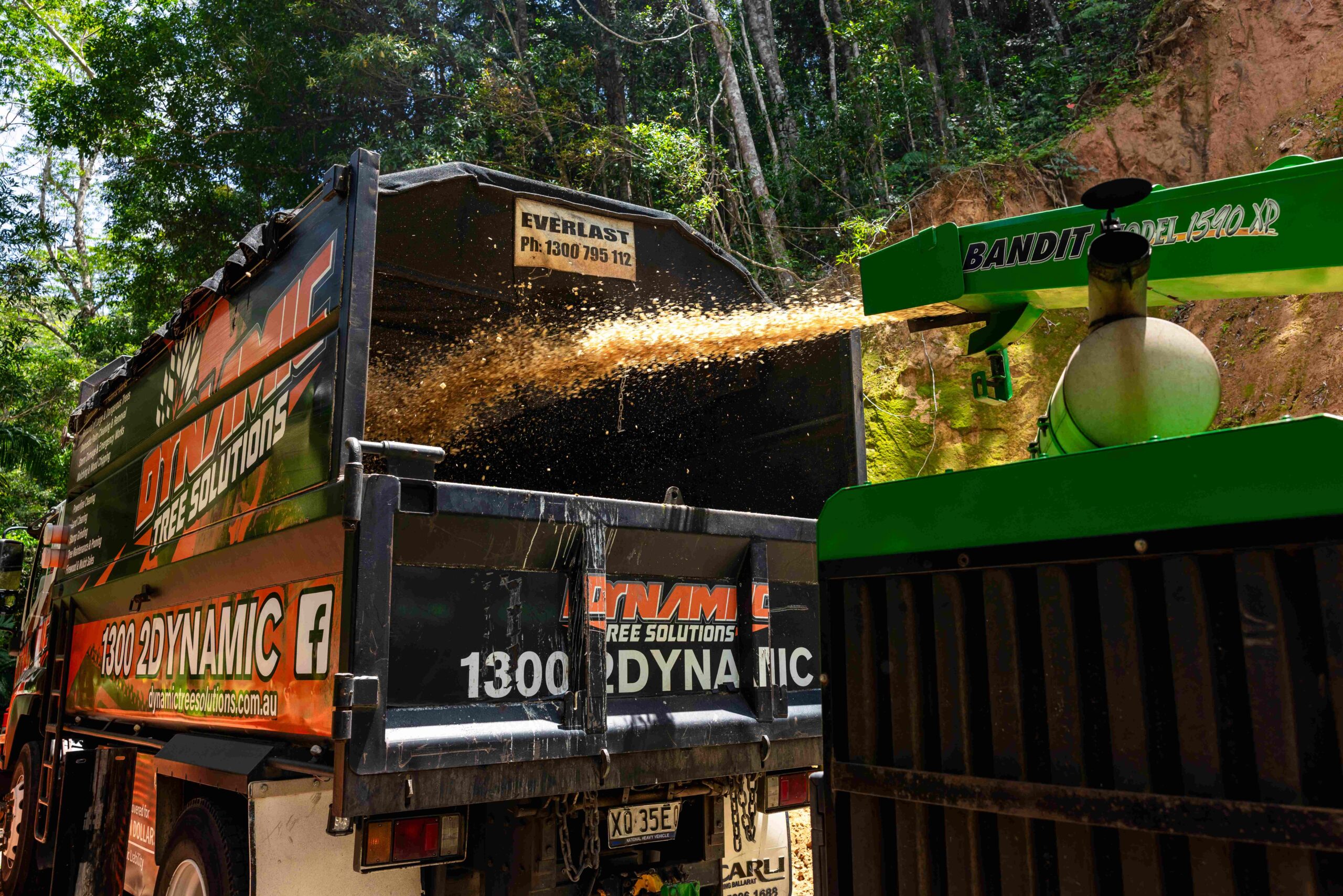
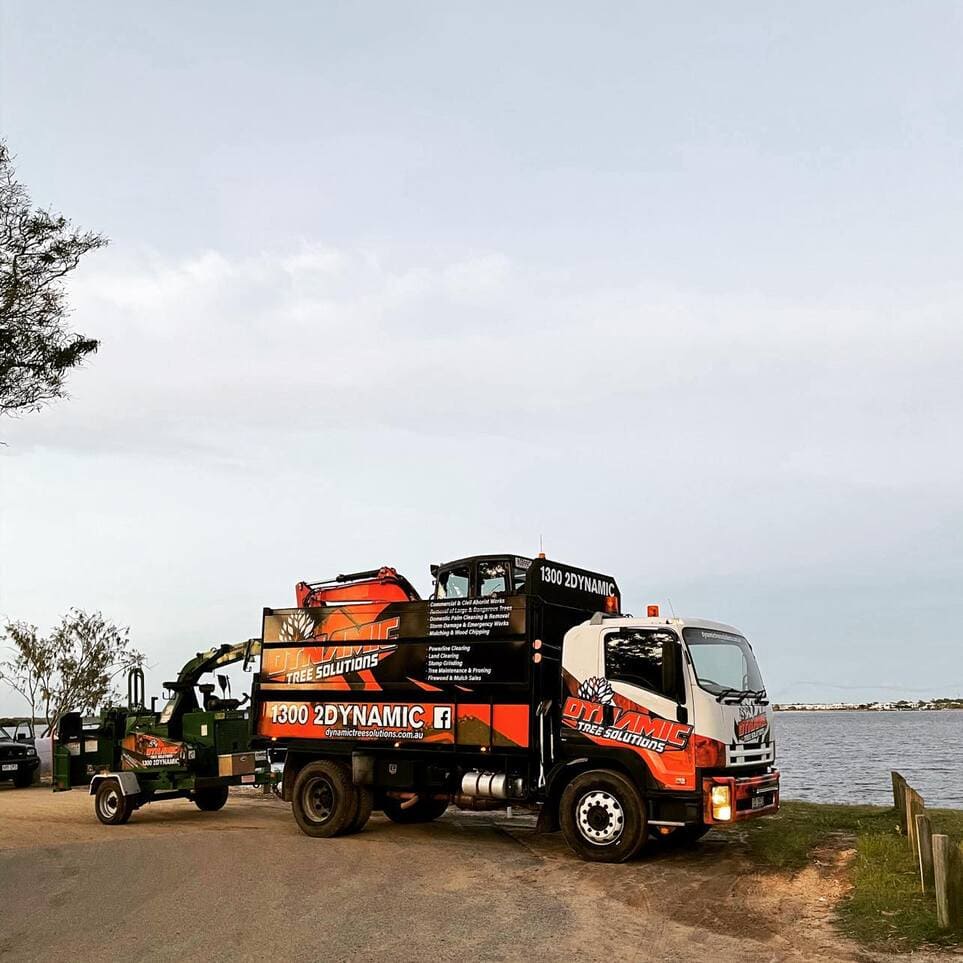
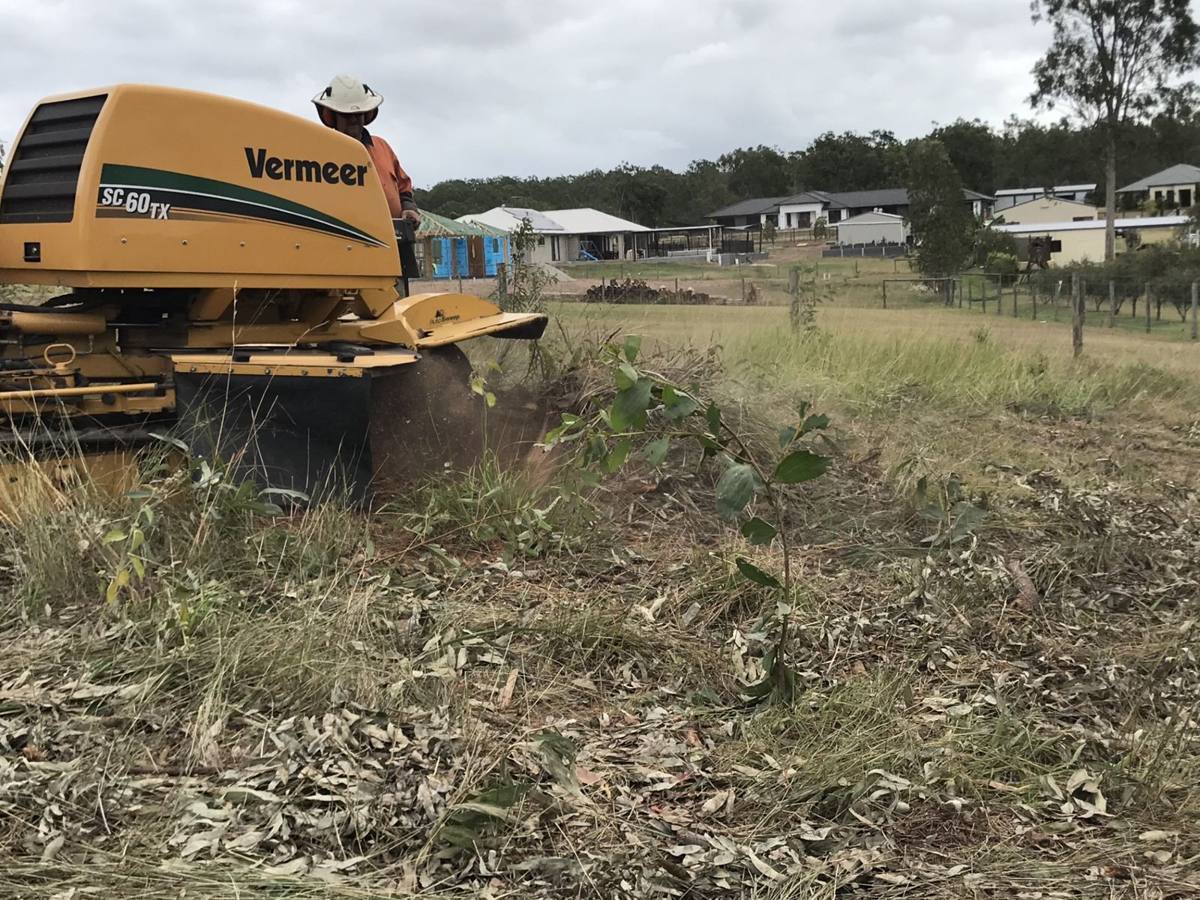
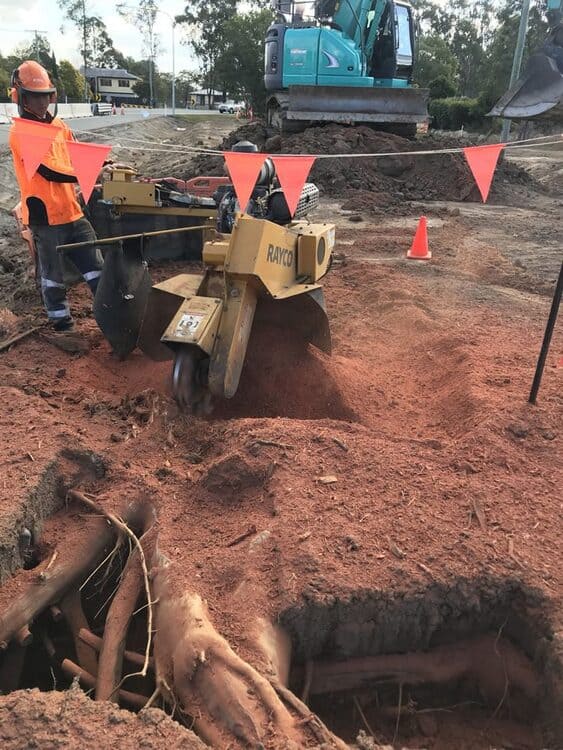
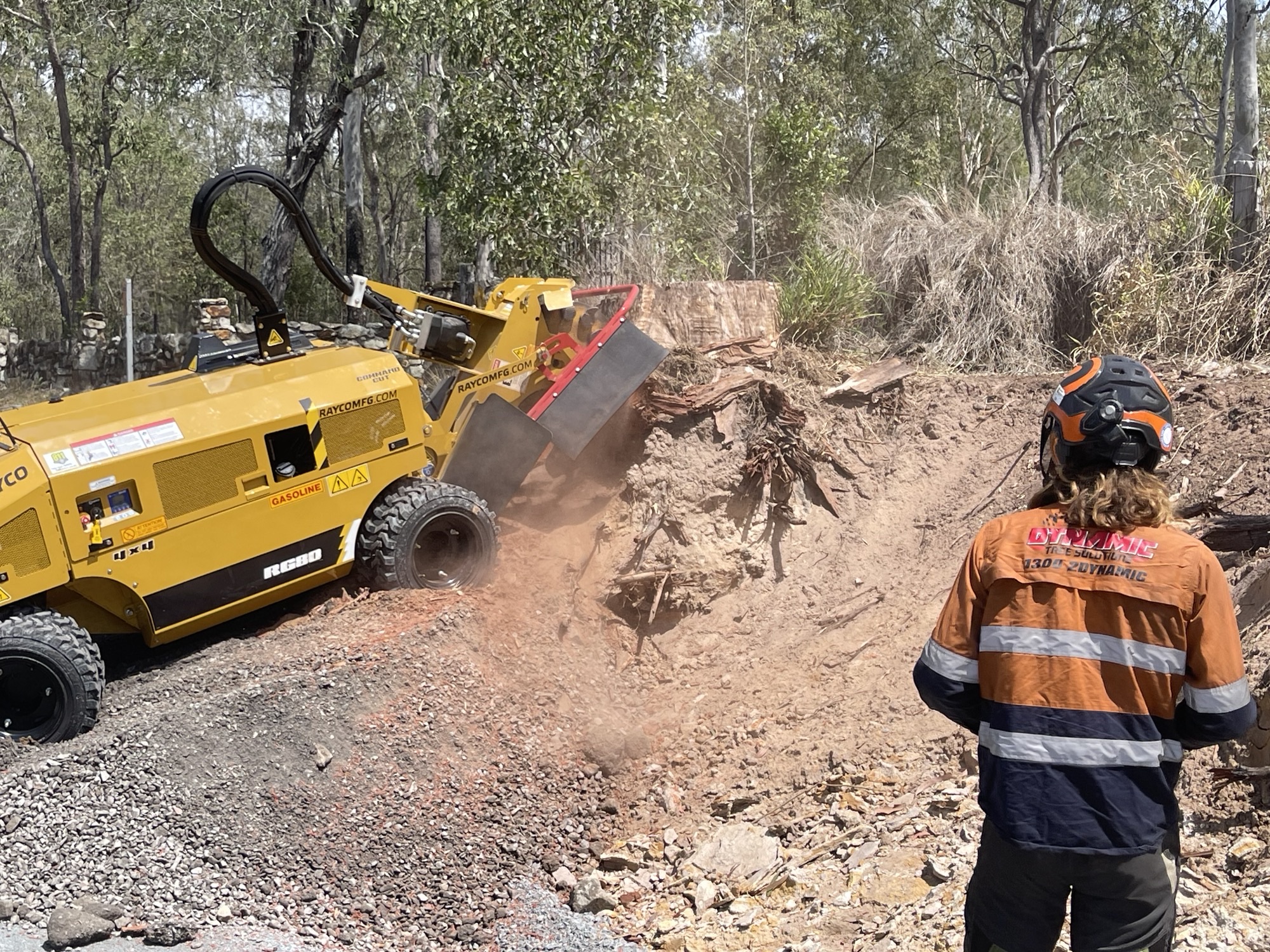
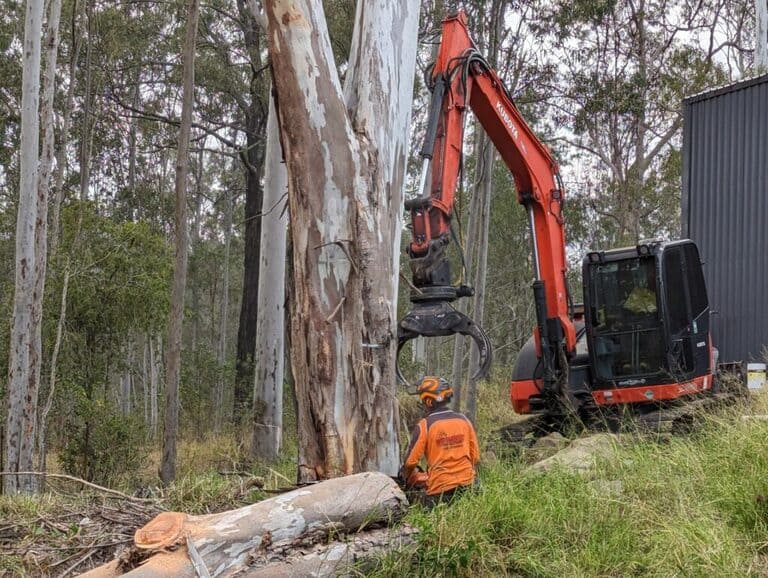

Most of Kagaru is native pasture, which means grazing among the trees rather than on fully cleared paddocks. Timber thickens along the Logan River and Teviot Brook, and the railway cuts across the landscape on its way south. That gives a mix of scattered paddock trees, creek-line timber and long fences.
Grazing on native vegetation leaves a lot of eucalypts standing in the paddocks. Forest red gum, ironbark and spotted gum are common in this part of the region. Some of these trees are very old, and age shows up as dead tops, hollows and heavy limbs over the cattle camp. We assess them on the spot and give you a straight call on which ones are a risk to stock, fences and people, and which are fine to leave for shade and wildlife.
Along the Logan River and Teviot Brook you get riparian timber such as paperbarks and she-oaks, and weeds that move along water, such as camphor laurel and lantana. Creek lines are also where council and State rules are strictest. Before we touch anything near the water, check your mapping. Then we can deal with the weeds, remove a hazard tree safely and keep the bank intact so the next flood does not take it.
Kagaru was split between Logan City Council and Scenic Rim Regional Council in 2008, so start by checking which one rates your land. On the Logan side, council’s vegetation protection page says mapped native trees over 4 m tall, or with a trunk circumference of 31.5 cm or more at 1.3 m, can be protected, and clearing natives inside the waterway corridor overlay needs approval. On the Scenic Rim side, the Planning Scheme 2020 overlays decide it. Council’s vegetation clearing fact sheet lists Rural Zone exemptions such as clearing for fencing, rural infrastructure repairs and service corridors, within set widths. State rules under the Vegetation Management Act 1999 also apply to remnant vegetation. Read our Scenic Rim council guide or the Logan guide for plain-words summaries. The landholder lodges any application.
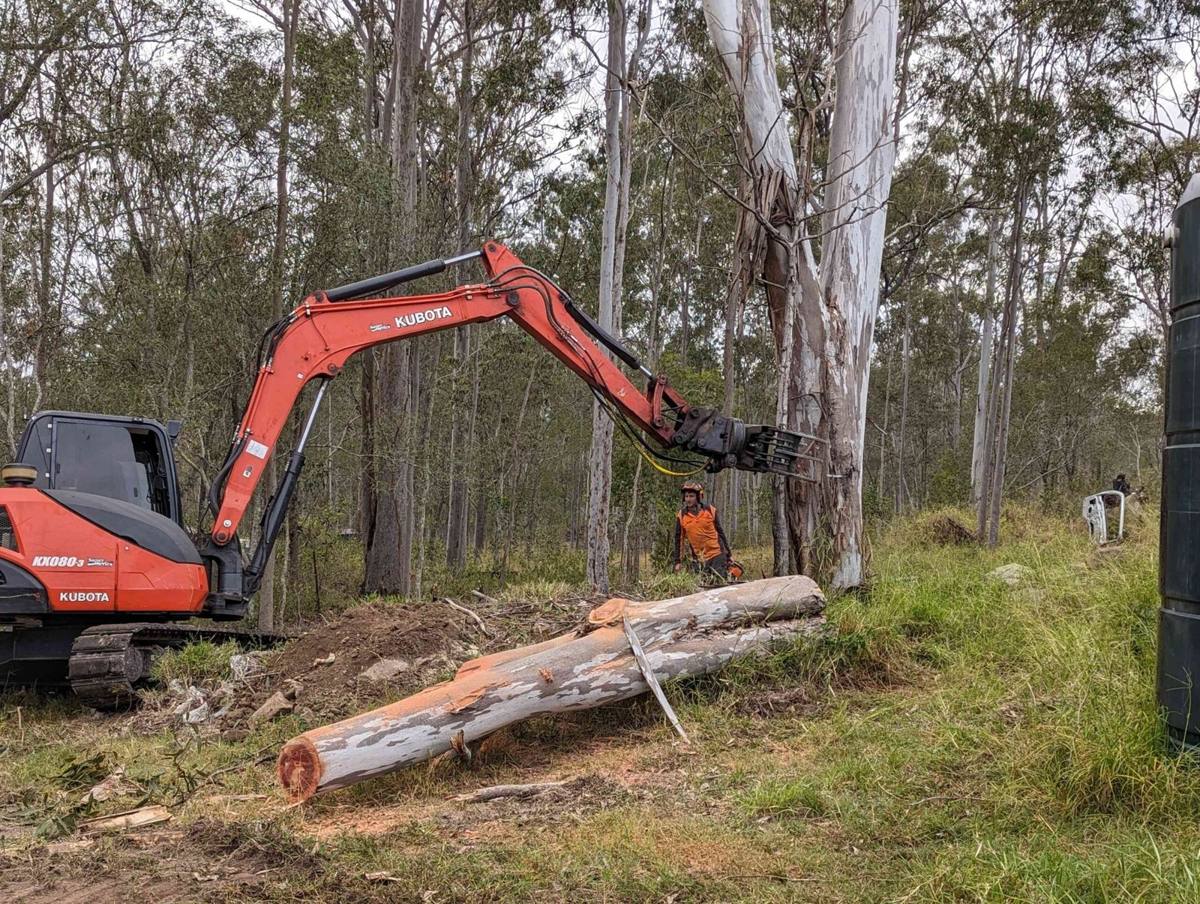
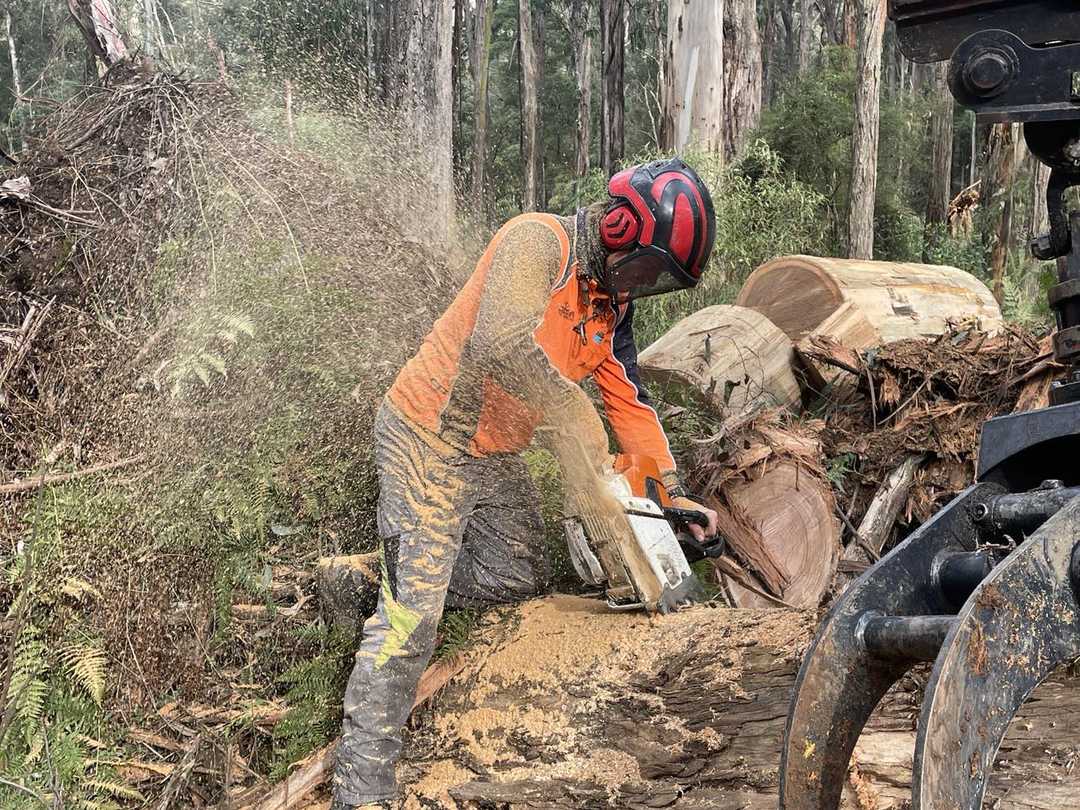
With the Logan River and Teviot Brook on its edge, Kagaru gets wet. Low ground near the water floods and stays soft afterward, and a heavy tree on saturated soil can start to lean. We wait for the ground to firm up before running machines across a paddock, because ruts in a grazing paddock last for years. Summer storms bring the other big risk, especially to old, isolated trees. The railway adds its own rule: we do not work on or near the rail corridor, so trees affected by it are a matter for the rail operator. Powerlines are similar. Only Energex crews touch the network, and if a tree brings a line down, stay at least 8 m away and call 13 19 62, or 000 if life is at risk. We handle the tree once the power side is safe.

Fill in the quote form with your address and a map pin if you can. Add photos of each tree, what is around it and how we get there, including gates, grids, creek crossings and wet spots. One or two trees can usually be priced from photos. Bigger clearing or mulching jobs are best walked first, so we can see the ground and agree on what stays. On the day we chip branches on site, and the mulch is yours to keep. Any tree removal Kagaru work gets planned around stock, weather and the state of the paddock. We are often working in Monarch Glen and Woodhill as well.

Yes. Only a small number of people live here, but the land is worked for grazing and cropping, and those properties need dead trees removed, fence lines cleared and stumps ground like anywhere else. We are happy to travel for it.
Kagaru is split between Logan City Council and Scenic Rim Regional Council. Check your rates notice. Each has its own planning scheme, maps and exemptions, so the answer on whether you need approval depends on which side your land falls.
We do not work on or near the rail corridor. If a tree on your land could affect the line, let us know. We may be able to remove it safely from your side, or the rail operator may need to be involved. We will tell you which.
Lantana is a weed, but it often grows among native vegetation that may be protected. Scenic Rim lists exemptions for fencing in the Rural Zone, and Logan has its own rules. Check your mapping, and we can then mulch the fence line.
About 27 km south of our Ellen Grove base. Our crews work around Flagstone and Jimboomba often, so it is not a long detour. The yard is not open to visitors, so book through the form or call 1300 239 626.
We work to keep damage low. Our stump grinder and excavators are tracked, which spreads their weight, and we avoid wet ground. Tell us where soft spots and buried water lines are, and we will plan the route around them.
Send photos and a map pin through the form, or call 1300 239 626 to talk through tree work on your Kagaru property.
We cover Kagaru and the rural land around it from our Ellen Grove base. The nearby areas listed below get the same crew and gear.
Nearby suburbs we service: Flinders Lakes, Monarch Glen, Cedar Grove, Woodhill, Flagstone, Riverbend, Silverbark Ridge, Undullah.
Logan City Council and Scenic Rim Regional Council (split locality): read our guide to council tree rules before any work on a protected tree.
Not sure if we cover your street? Call 1300 239 626 (1300 239 626) or send photos through the quote form.
