
You have 0 items in your cart
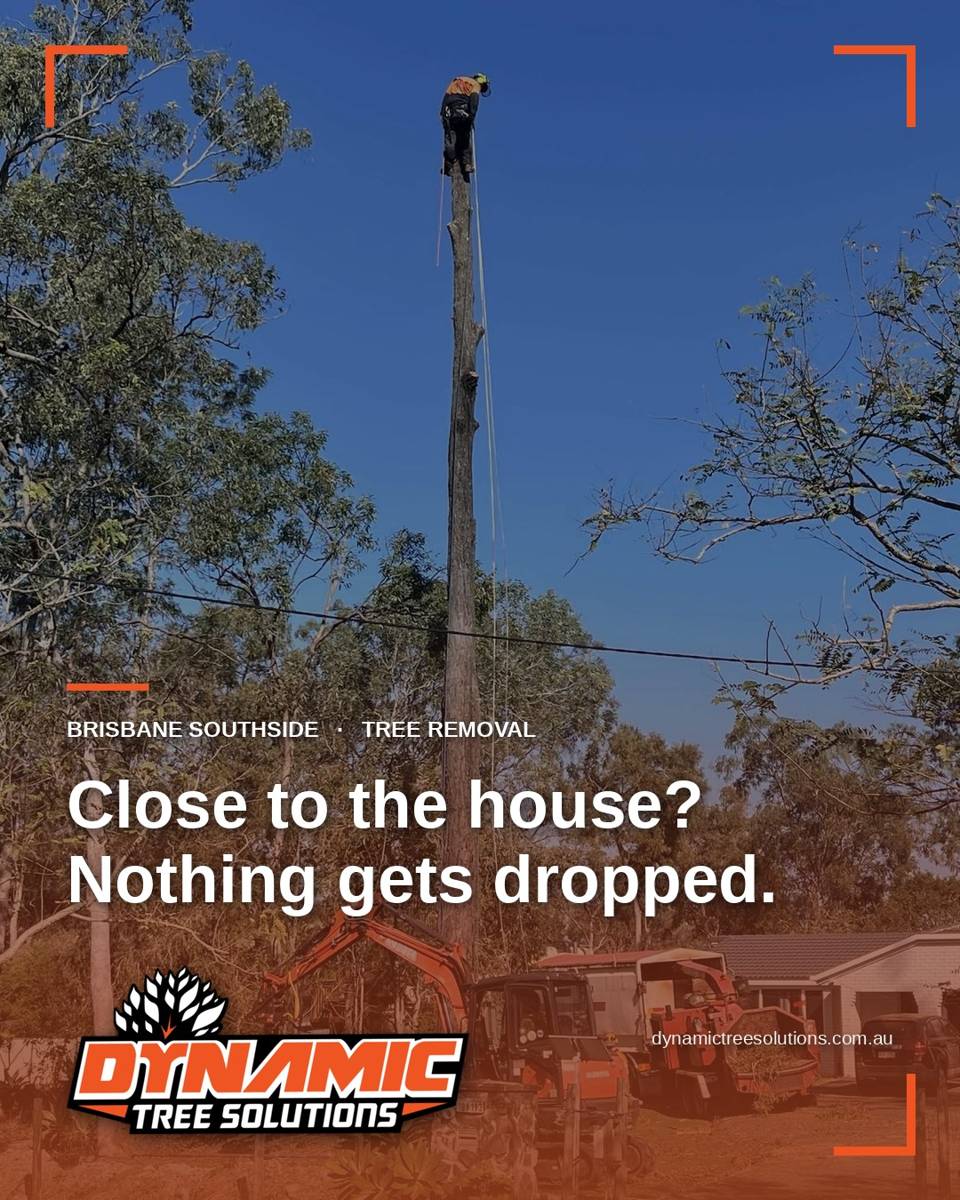
The cost to remove a tree near a house is higher than the cost to remove the same tree in the middle of a paddock, and the reason is simple: nothing can be dropped. Every limb has to be rigged, lowered or lifted over the roof, which means more people, more gear, sometimes a crane, and a slower day. How much more depends on how close the tree is, what’s underneath it and how we get the machinery in.
If you’ve typed “cost to remove tree near house” into Google, you’ve probably already had one quote that looked high and you want to know why. Fair question. Here’s what’s going on behind the number, so you can tell a fair price from a lazy one. No dollar figures in this post, because a figure without seeing the tree is a guess, and we don’t guess on things that land on roofs. Our Brisbane tree removal cost guide covers the general drivers; this one is about the house.
Why does a tree near a house cost more to remove?
Out in the open, a tree gets a notch, a back cut and a push, and it’s on the ground in ten minutes. The expensive part of a paddock tree is cleaning it up. A tree over a house is the opposite. The felling is the whole job, and it happens one piece at a time.
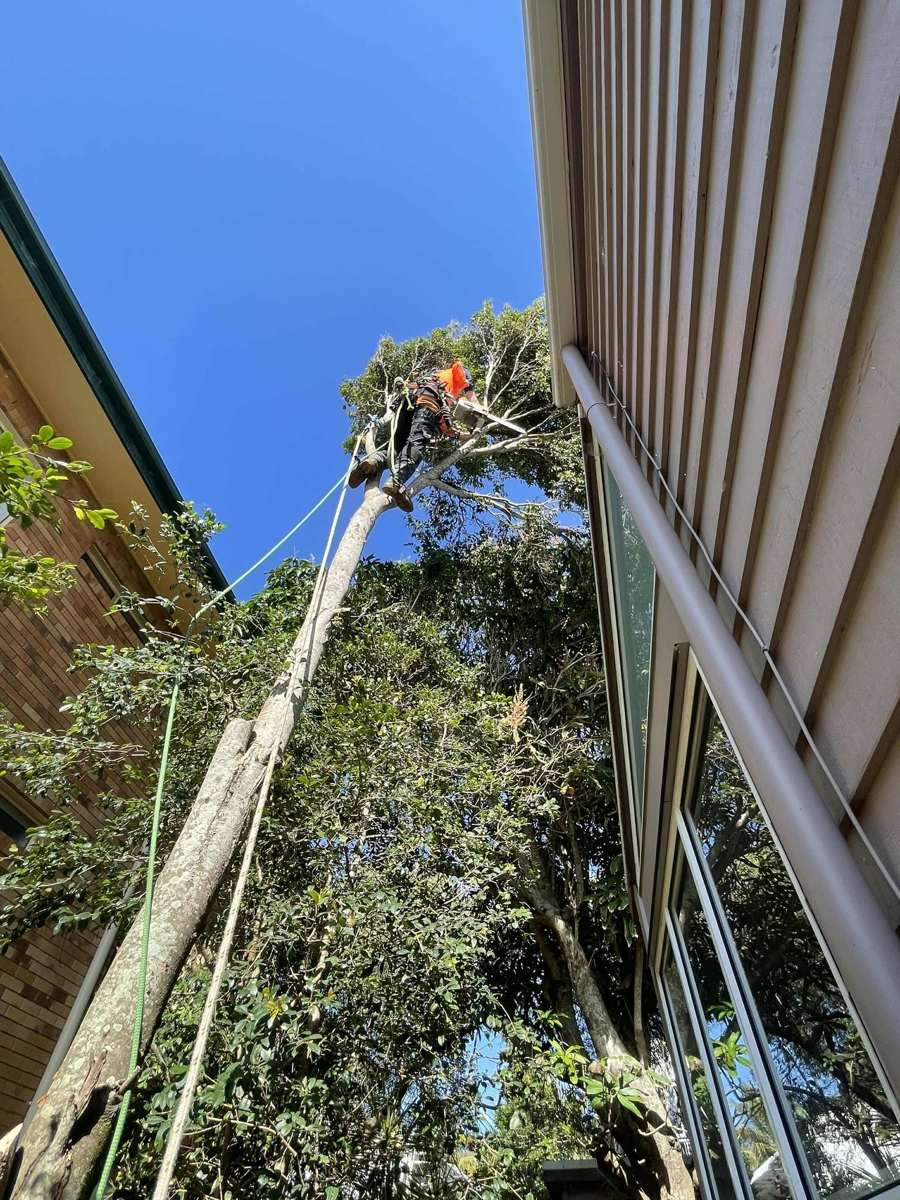
A climber goes up on rope and harness and strips the tree from the top down. Each limb over the roof gets a rigging line through a pulley above it, the ground crew takes the weight, the climber cuts, and the piece is lowered on the rope instead of falling. Then the trunk comes down in blocks the same way. On a big gum that’s forty or fifty cuts, every one of them planned, and a ground crew of two or three who never stop working the ropes.
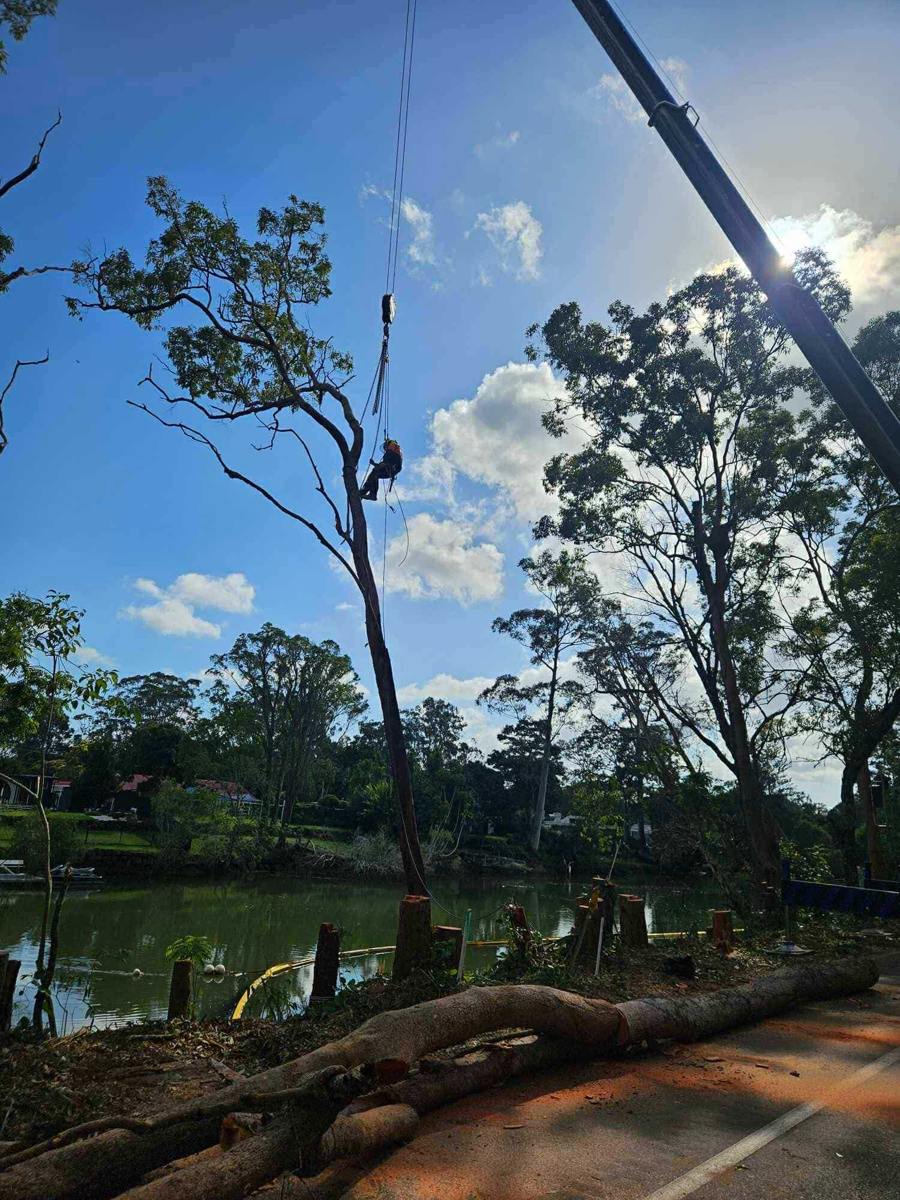
The gear list grows too. Rigging kit, friction device on the base of the tree, a porta-wrap, sometimes a second climber. Where there’s no room to lower anything, or the tree’s too big to rig safely, the crane comes in and lifts whole sections straight over the ridge line onto the street. Cranes have a day rate, need a flat spot to set up and often need traffic control, so that’s where quotes jump.
What actually drives the price up?
Roughly in order of how much they change the quote:
| Factor | Why it matters |
|---|---|
| How much canopy is over the roof | A tree beside the house with one limb over the gutter is a few rigged cuts. A tree whose whole crown sits over the roof is a full dismantle. |
| Size and species | Big gums are heavy and brittle, figs and camphor laurels are heavy and spread wide. Palms are light and quick. Weight is what the ropes and the crane have to handle. |
| Access | Can the chipper truck park near the tree? Will the excavator fit through the side gate? If everything has to be carried out by hand through the house, that’s a day of labour on its own. |
| What else is underneath | Pool, glass fence, solar panels, the neighbour’s roof, a powerline. Each one takes a drop zone away and adds rigging. |
| Crane or no crane | The single biggest step up. Needed when there’s no safe way to rig, or when rigging would take two days and the crane does it in one. |
| Tree condition | A dead or rotten tree can’t be climbed or rigged off its own stem. That means an elevated work platform or a crane whether we like it or not. |
| Stump and roots | Grinding a stump hard against a slab or a retaining wall is slower and the grinder has to be the small tracked one. |
Does it cost more if the tree is over the roof rather than beside it?
Yes, and usually by a fair margin. “Near the house” covers a lot. A jacaranda two metres off the wall with its canopy leaning away from the house is close, but half of it can still be felled into the yard. A gum with its trunk a metre off the slab and its crown straight over the bedrooms is a different animal. Every piece of that tree has to pass over the roof on a rope or a hook. When you compare quotes, make sure the arborist actually looked at where the crown sits, not just the trunk.
A job we did on a brick house in Brisbane’s south shows the pattern. Tall gum, maybe twenty-five metres, close to the house with the Energex service line running through the yard under it. The climber stripped the crown limb by limb, then blocked the spar down, with the excavator grab taking each section and the chipper truck on the driveway eating the brush as it came. Nothing touched the roof, the line or the cars. It took most of a day with four people. The same tree on acreage is a morning’s work for two.
Should I remove a tree that’s close to the house?
Not automatically. Plenty of trees sit happily next to houses for decades. The questions that actually matter: is it dropping limbs, is it dead or dying, is the root plate lifting, is it cracking the slab or the drains, and is it the right species to be there at all. A healthy jacaranda or bottlebrush beside a Queenslander is fine. A big spotted gum with dead wood in the crown over a tin roof wants a proper look. A camphor laurel lifting the path and the footings is going to keep doing it.
If you’re not sure, a visual tree assessment is the quick way to find out, and the answer is often “prune it and keep it”. Our page on dangerous tree removal lists the warning signs that tip a tree from “keep an eye on it” to “take it out”.
Do I need council approval to remove a tree close to the house?
Depends on your council. In Brisbane City Council’s area, a tree whose trunk is within three metres of the house on a standard lot generally doesn’t need a permit under the Natural Assets Local Law, but check the protected vegetation map first because overlays override that. In Logan, most lots under 5,000 square metres outside environmental and rural zones are exempt. Ipswich works off zone and overlay under the City Plan 2025, so check ePlan or ask. We’ve got plain-English pages on Brisbane, Logan and Ipswich council rules. Whoever you hire should check before they quote, not after.
What if the tree is in the powerlines as well?
Then the quote has another line on it. Energex trims the street lines for free on their own schedule. The service line from the pole to your house is your responsibility, and there’s an exclusion zone around it that only authorised people can work inside. For a tree near the house that’s also in the service line, we either work around it with the exclusion zone respected or arrange for the line to be dropped for the day. That’s organised before the job, not discovered on the morning. Energex spells out the rules on trees and powerlines.
Can I save money by doing some of it myself?
You can save a bit by doing the clean-up, if you’ve got a trailer and a tip run in you. What you shouldn’t do is the cutting. A tree near a house is the one job where a wrong cut costs more than the whole quote, and WorkSafe Queensland’s tree work guidance exists because people die doing this with a hardware-store chainsaw and a ladder. Dropping a limb through your own roof also tends to be a conversation with the insurer you’ll lose, because it wasn’t a storm, it was you.
How do I get an honest quote for a tree near the house?
Get the arborist to look at it, in person or from decent photos: the whole tree with something for scale, the base, what’s underneath, and the access from the street. Then make sure the written quote lists the method (climb and rig, EWP, crane), what’s included (stump, waste, clean-up), whether council has been checked, and the insurance. We wrote a whole post on what a tree removal quote should have on it. If two quotes are far apart, the lower one has usually skipped the crane or the rigging, and you’ll find out which on the day.
We do this work every week across Brisbane’s southside and Logan, from the older gums in Springwood and Loganholme to the fast-growing stuff planted too close to the slab in Crestmead and Park Ridge. Ipswich jobs run through our tree removal Ipswich crew.
Got a tree too close to the house? Call 1300 239 626 or send photos through the quote form and we’ll give you a written price before anyone turns up.
Frequently asked questions
How much does it cost to remove a large tree near a house?
More than the same tree in the open, because it has to come down in rigged sections or by crane instead of being felled. The size of the crown over the roof, the weight of the timber, the access for the chipper truck and whether a crane is needed set the price. A written quote after a site visit or good photos is the only honest number.
What does it cost to remove a tree that's over the house?
A tree whose crown sits over the roof is a full dismantle: every limb lowered on a rope or lifted by crane, nothing dropped. Expect it to cost noticeably more than a tree beside the house that can be partly felled into the yard. The quote should say whether it's a climb-and-rig job, an EWP job or a crane job.
Who pays to remove a tree that has fallen on the house?
Usually your home insurance, if the tree came down in a storm. Ring the insurer, get the make-safe done and keep every photo. The removal and the roof repair are normally handled as one claim. If the tree failed because it was dead and you'd been told, the insurer may push back, which is why a written arborist assessment before storm season is worth having.
Should I remove a tree close to my house?
Only if there's a reason: dead wood in the crown, a lean or lifted root plate, roots in the slab or drains, or a species known to drop limbs. A healthy tree in the right spot can stay next to a house for decades. A visual tree assessment by a qualified arborist tells you which one you've got, and often the answer is to prune it and keep it.
Can I remove a tree in front of my house?
If it's on your land, the usual council rules apply: Brisbane generally allows removal of a trunk within three metres of the house on a standard lot, Logan exempts most lots under 5,000 square metres outside environmental zones, Ipswich depends on zone and overlay. If it's on the footpath or verge, it belongs to council and you can't touch it; report it and they'll inspect.
Does removing a tree near the house need a crane?
Not always. Most are done by a climber with rigging and a ground crew. A crane comes in when there's no safe place to lower pieces, when the tree is too big or too rotten to rig off its own stem, or when it's quicker and safer than two days of rigging. The quote should tell you which.
