
You have 0 items in your cart
When to prune trees in Australia depends on where in Australia you are standing. Down south, the old rule of pruning in winter while the tree is dormant works fine. In south-east Queensland most of our trees never properly go to sleep, so the best window for most pruning is the cooler, drier months from about March to August, with light storm-prep work in early spring and as little heavy cutting as possible through the heat of summer.
That is the short answer. The rest of this is for people who have read a gardening column written in Melbourne, gone out with the loppers in October, and are now wondering why the poinciana looks sulky. It is written by a crew that prunes trees across Brisbane, Logan and Ipswich every week, so it is about SEQ trees in SEQ weather.
Why doesn’t southern pruning advice work in SEQ?
Most Australian pruning advice is written for places with a real winter. In Melbourne, Adelaide or the Southern Highlands, deciduous trees drop their leaves, sap slows right down, and a winter cut heals into a tree that is resting. That is where “prune in winter” comes from, and down there it is good advice.
South-east Queensland is subtropical. Our winters are mild and dry, our summers are hot and wet, and most of what grows in a Brisbane backyard is evergreen: gums, lilly pillies, cocos palms, camphor laurels, citrus, mangoes. They slow down in winter but they do not stop. The things that actually decide pruning timing here are heat, rain and storms, not frost and dormancy.
So the SEQ version of the rule is less “winter” and more “when the tree is not stressed and the weather is not about to make things worse”. That points to autumn and winter for the big jobs, and a careful, light hand the rest of the year.
When to prune trees in Australia: what does the SEQ year look like?
Here is how we plan pruning work through the year on the southside and out west. It is a guide, not gospel. A tree with a cracked limb over the kids’ trampoline gets pruned the day you notice it, whatever month it is.
| Months | SEQ weather | Good for | Go easy on |
|---|---|---|---|
| March to May | Cooling, wet season easing | Structural pruning, crown thinning, mango and fruit tree tidy after harvest | Anything still flowering |
| June to August | Mild, dry, settled | Bigger reductions, deciduous fruit trees (apple, fig, stone fruit), formative pruning on young trees | Not much. This is the main window |
| September to November | Warming, storm season starts in October | Dead-wooding, weight reduction over roofs and fences, citrus and avocado after harvest | Heavy cuts, trees in full flower, branches with nesting birds |
| December to February | Hot, humid, storms and the wet | Emergency and safety work only, palm clean-ups | Big reductions on stressed trees, anything that opens bark to the sun |
Our longer Brisbane pruning guide, season by season goes through each window and each common species in more detail. This post is the bigger picture: why the timing is different up here, and what to leave alone right now.
What shouldn’t you prune in spring in SEQ?
Spring is when we get the most calls asking for “a good hard prune before summer”. Some of that is sensible. Some of it is the wrong job at the wrong time. Things we would usually hold off on between September and November:
- Trees in flower. Jacarandas flower from mid-October into November, and poincianas follow into summer. Cut them now and you lose the show you have waited all year for. Prune flowering trees once they finish.
- Heavy reductions on gums. Spring is a growth flush. Take a big chunk of canopy off now and many gums answer with a mass of fast, weakly attached shoots. That is next year’s storm problem, made today.
- Trees with nesting birds or possums. Spring is nesting season. Part of our job is to look before we cut, and if there is an active nest in the limb we move the work or the timing.
- Topping. Never a good idea in any month. It is the fastest way to turn a sound tree into a hazard.
What spring is good for is the safety work: taking out dead wood, reducing weight on long limbs over the roof, lifting branches off the gutter and the service line. That is light, targeted dead-wooding rather than a big canopy cut, and it is what you want done before the first proper storm cell rolls through. With a hotter, drier spring on the cards this year, a stressed tree also copes far better with a light trim than a heavy one.
When should fruit trees be pruned in south-east Queensland?
Fruit trees are where the southern advice causes the most damage, because the backyard orchard up here is a mix of subtropical evergreens and temperate deciduous trees. The rule of thumb that works: prune evergreen fruit trees after harvest, and prune deciduous ones in winter.
- Citrus: a light prune after you have picked the fruit, usually late winter into early spring before the new flush. Citrus does not need much. Clear dead wood, open the middle a little, keep the skirt off the ground.
- Mango: straight after harvest, in late summer or early autumn. Leave it too late and you cut off next season’s flowers.
- Avocado: after harvest, and lightly. Avocado bark sunburns easily, so a hard cut in late spring or summer that suddenly exposes branches can do more harm than good.
- Olive: late winter to early spring, before flowering. Thin the centre so light and air get in.
- Apple, fig and stone fruit: these are deciduous, so the classic winter prune applies, June to August while they are bare.
If the tree is small enough to prune from the ground with a good pair of secateurs, have a go yourself. Once it needs a ladder and a chainsaw, it needs someone in a harness.
Does the council care when I prune?
The council cares more about how much you cut than when. In Brisbane City Council’s area, check the protected vegetation map first. If the tree is protected, you can generally prune up to 20% of the live foliage in any 12 months without a permit. More than that needs one, and the permits are free.
Out west in Ipswich, whether you need approval depends on the zone and any overlays on the block under City Plan 2025, so check the council’s ePlan or ring them. Around Brassall and Karalee, a lot of blocks sit close to the Bremer and Brisbane rivers and the bush corridors along them, which is exactly where overlays turn up. Our Ipswich council tree rules page covers the basics. The safe line is always the same: check with council or ask us, because we do this every week.
How hard should you cut, whatever the season?
Timing matters, but the cut matters more. A good pruning cut in the wrong month usually heals. A bad cut in the perfect month does not.
The Australian Standard for this is AS 4373, Pruning of amenity trees, and Arboriculture Australia is the industry body behind good practice. In plain words, the standard says: cut back to a branch collar or a suitable lateral, do not leave stubs, do not flush-cut into the trunk, and do not take off more canopy than the tree can cope with in one go.
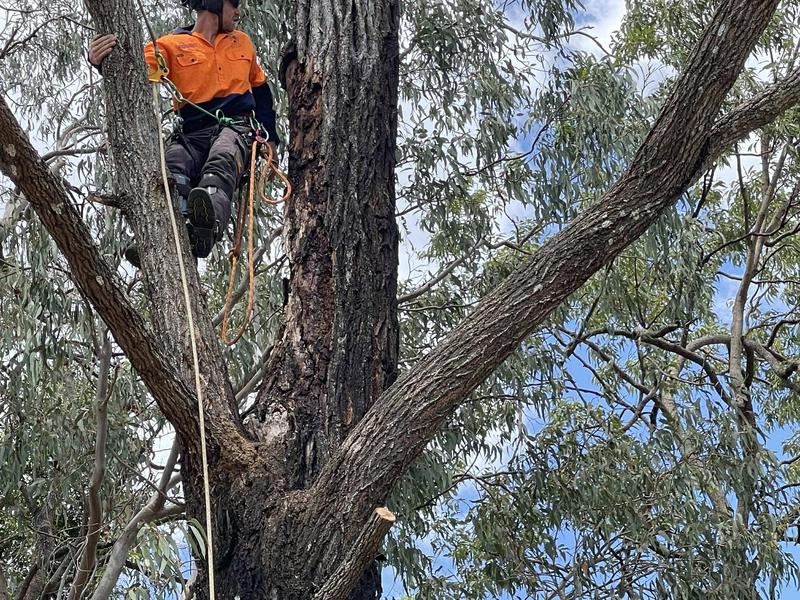
The mistake we see most often is the stub. Someone takes a branch off 30 cm out from the trunk because that is where the ladder reached. The stub dies back, rot moves in, and five years later it is a hollow at exactly the spot a limb wants to tear out in a storm. On the older, bigger blocks around Camira, it is common to find old stubs from a well-meaning clean-up years ago, each with a cavity behind it. Proper tree pruning to the standard avoids all of that.
So when should you book it?
If it is general shaping, thinning or a big reduction, book it for autumn or winter. If it is dead wood, limbs over the house or anything near the service line, book it now, before the worst of the storm season. If a tree has a crack, a split or a sudden lean, do not wait for any season at all.
Not sure which bucket your tree is in? Send us a photo through the quote form or call 1300 239 626, and one of our arborists will tell you whether it is a now job or a winter job. If it is a winter job, we will tell you that too.
Frequently asked questions
When should citrus trees be pruned in Australia?
Prune citrus lightly after harvest. In south-east Queensland that is usually late winter into early spring, before the new flush of growth. Take out dead wood, open the centre a little and keep the lower branches off the ground. Citrus rarely needs a hard prune, and heavy cuts in summer can sunburn exposed bark.
When is the best time to prune olive trees in Australia?
Late winter to early spring, before the tree flowers. Thin the centre of the canopy so light and air get through, and remove crossing or dead branches. In SEQ, avoid heavy pruning in the heat of summer.
When should apple trees be pruned in Australia?
Apples are deciduous, so the classic winter prune applies even in Queensland: June to August while the tree is bare. A light summer trim to control shape is fine, but the main structural prune belongs in winter.
When do you prune fig trees in Australia?
Edible figs drop their leaves, so prune them in winter while they are dormant. Big ornamental figs such as weeping figs and Moreton Bay figs are a different story: they are large evergreen trees that need an arborist, and in Brisbane many are protected, so check council rules before any cutting.
When should avocado trees be pruned in Australia?
After harvest, and lightly. Avocado bark sunburns easily, so a hard prune in late spring or summer that suddenly exposes branches to full sun can damage the tree. Small, regular trims to control height work better than one big cut.
