
You have 0 items in your cart
Can you save a leaning tree? Sometimes, yes. A tree that has always leaned, with firm soil and no cracks at the base, is usually fine and just needs a sensible prune to take weight off the long side. A tree that has started leaning recently, after rain or a storm, with lifted soil or a gap opening on the back of the root plate, usually cannot be saved and needs to come down before it picks its own time.
That is the honest answer, and it is the one we give over the phone every storm season across Brisbane, Logan and Ipswich. The rest of this page is how we tell the two apart on site, what can actually be done for a lean, and what to do if yours has moved in the last week.
Is a leaning tree always dangerous?
No. Half the gums in South East Queensland lean. Trees grow toward light, so anything on a creek bank, a boundary with a tall neighbour, or the shady side of a house will lean out for its whole life and be perfectly stable doing it. The trunk thickens on the loaded side, the roots build up on the tension side, and the tree gets on with it. We call that a natural lean, and on its own it is not a reason to ring an arborist.
What we worry about is a change. A tree that was upright last month and is on a lean this month has moved at the roots, and that is a different animal. The lean itself is not the problem. The reason for the lean is the problem.
How do you tell a safe lean from a tree about to fall?
You do not need to climb it. Walk around the base and look at the ground on the side away from the lean. Here is what we check, in the order we check it.
- Lifted or cracked soil behind the trunk. If the ground on the high side has heaved up, split, or you can see a crescent-shaped crack in the lawn, the root plate is rotating. That is a failing tree.
- Exposed roots that used to be buried. Same story. If roots have appeared on the tension side, the plate has lifted.
- A gap between trunk and soil. Push the trunk and watch the ground. If it moves, stop pushing and step away.
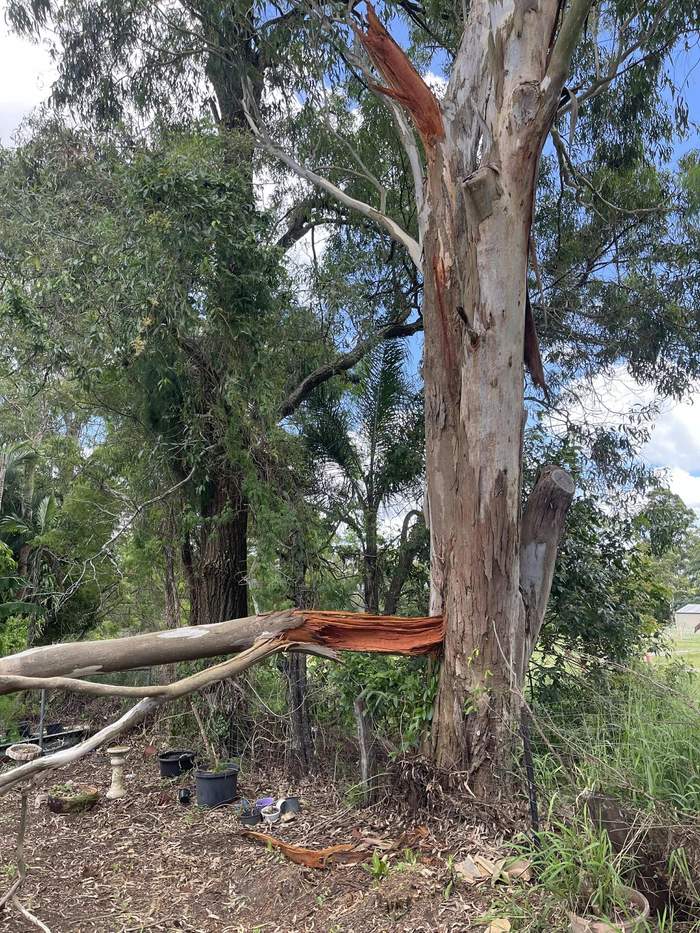
- Fresh cracks or bark tearing on the trunk. Especially on the compression side, low down. Wood does not crack quietly.
- Dead crown, fungus at the base, or hollow sound. Decay in the roots or lower trunk takes away the strength the lean relies on.
- Saturated ground. Trees fail after big rain, not during the dry. If the lean turned up after a week of wet, treat it seriously.
Then look at the lean itself. A gentle, even curve from the ground up with a trunk that has grown thicker on the loaded side is the tree correcting itself over years. A straight trunk on a sharp angle, like a pole that has been pushed over, is a tree that moved recently and has not had time to adapt.
Can you straighten a leaning tree?
A small tree, yes. Anything you planted in the last two or three years, under about three metres, can be eased back upright and staked. Do it after rain when the soil is soft, use two stakes and a wide soft tie so you do not strangle the trunk, and take the stakes off after a year so the tree learns to hold itself.
A big tree, no. Nobody is winching a ten metre gum back to vertical. The roots on the tension side have already torn or stretched, and pulling the trunk upright does not glue them back together. Cabling and bracing exist, but they are for holding two co-dominant stems together or supporting a heavy limb, not for propping up a tree that has moved at the base. Anyone who offers to winch your established tree straight is either guessing or planning to invoice you twice.
What can an arborist actually do to save a leaning tree?
If the roots are sound and the lean is natural, there are three real options and we use all of them.
Crown reduction. We shorten the long limbs on the leaning side so the weight sits closer to the trunk. Done properly under AS 4373 (the Australian pruning standard), it takes the lever arm off the roots without butchering the shape. This is the one that saves most leaning trees.
Dead-wooding and thinning. Taking out dead limbs and a bit of inner growth reduces the sail area so the wind has less to grab in a storm. Not as powerful as a reduction, but useful on a tree you want to keep looking natural.
Reduce what the tree is leaning over. Sometimes the tree is fine and the target is the issue. If the lean is over the kids’ trampoline or the carport, we talk about what is underneath it as much as what is above.
What we will not do is prune a tree with a lifted root plate and call it saved. That just leaves a lighter tree that still falls over.
When can you save a leaning tree, and when does it have to go?
We take a leaning tree out when any of these line up: the soil has lifted or cracked on the high side, the lean has changed since the owner last looked, there is decay or fungus at the base, or the tree is over a house, road, powerline or anywhere people sleep and we cannot get it below a sensible risk with pruning. One of those on its own might be a watch-and-see. Two or more, and it is a removal.
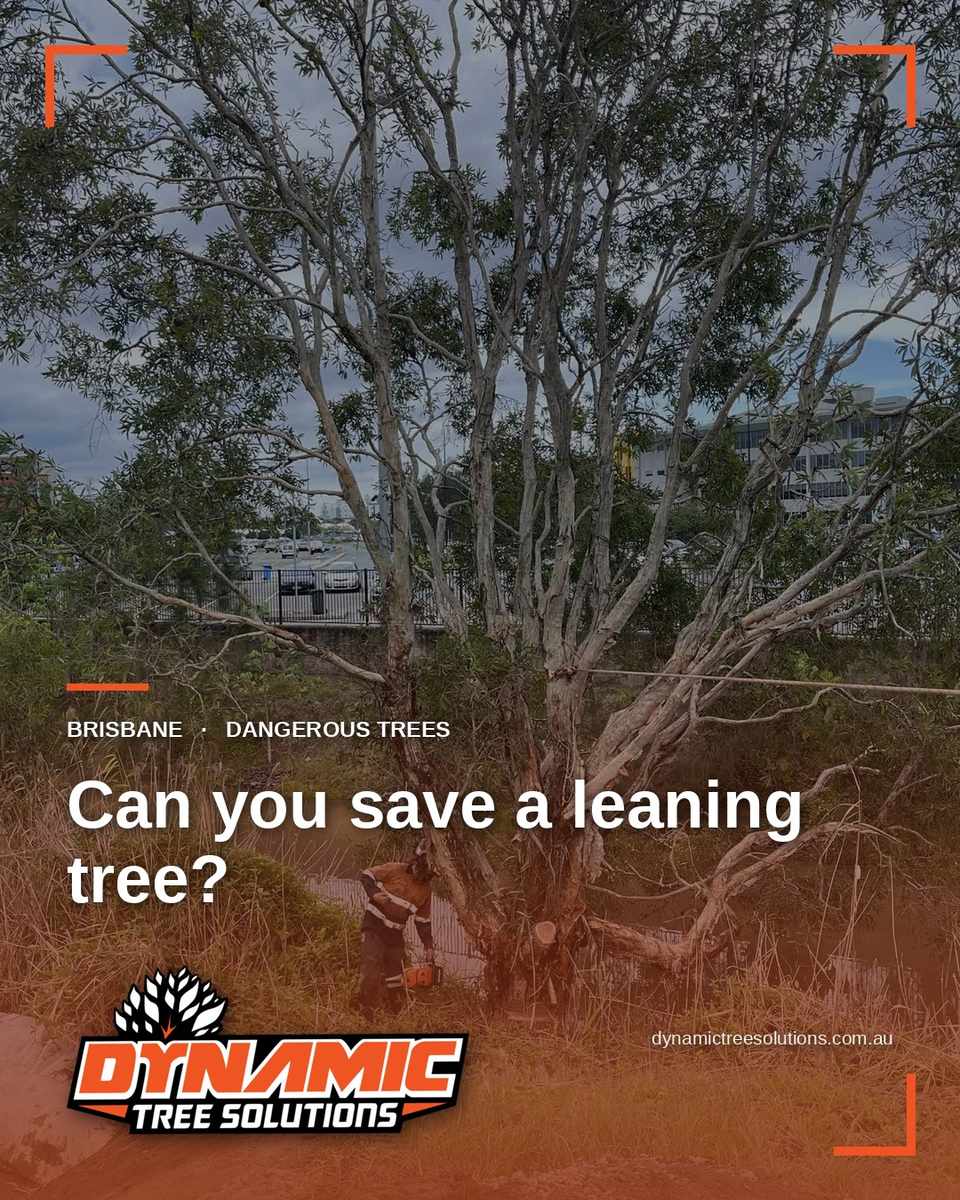
A job that sticks in my head was a big multi-stemmed paperbark on a creek bank behind a commercial site. Every stem had leaned out over the water for years chasing the light, and that was fine until the bank underneath it started letting go. There was nothing to prune. We dismantled it stem by stem from the ground and the creek got its sunlight back. The tree was healthy. The ground was not. That is the bit people miss.
Why do trees start leaning after storms and heavy rain?
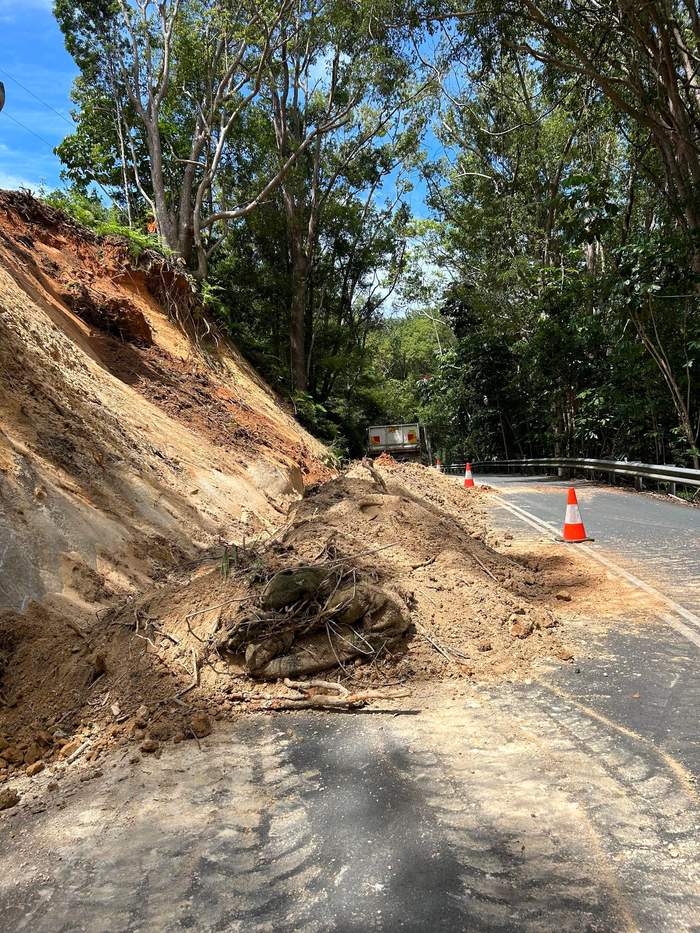
Roots hold a tree up the way tent pegs hold a tent. Soak the ground for a week and the pegs are in mud. Then a storm cell comes through with 90 km/h gusts, the crown acts as a sail, and the whole root plate rotates. In SEQ that happens most between October and March, and it is why our phone goes mad the morning after a big cell. The Get Ready Queensland advice to sort out your trees before storm season is not a slogan. It is the difference between a planned job and an emergency one.
Clay soils around Logan and Ipswich make it worse. Clay holds water, swells, and loses grip on the roots. On the acreage blocks out at Logan Village and Munruben we see big ironbarks and spotted gums that stood for fifty years go over in one wet February. Down along the river and creek flats at Goodna the problem is scoured banks, exactly like that paperbark. Different soil, same physics.
Do you need council approval to remove a leaning tree?
Depends on the council and the tree. In Brisbane City Council areas, check the Protected Vegetation map first. If the tree is an immediate hazard you can act, but you must send photos and an arborist report to council within 10 business days, and permits are free in any case. The detail is on the BCC protected vegetation permits page. In Logan, most lots under 5,000 square metres outside environmental or rural zones are exempt, and native vegetation within 10 metres of a house can be cleared for bushfire safety; the Logan City Council vegetation page has the overlays. Ipswich depends on zone and overlay under the City Plan, so check ePlan or ring council.
Our honest advice is the same everywhere: if the tree is on a fresh lean over something that matters, ring us first and we will tell you where the council sits. We do this every week and we would rather you did not stand under it reading a planning scheme.
What should you do right now if your tree has started leaning?
Keep people and cars out from under it, including the side it would fall toward and a bit either way. Do not let the kids or the dog back there. Do not start cutting limbs off yourself to lighten it; that changes the balance and can be the thing that tips it. Take three photos: one of the whole tree from the side showing the lean, one of the ground on the high side, and one of the base. Send them through our quote form or ring 1300 239 626. If it is over a house or a road we treat it as emergency tree work and come out the same day where we can.
If it is a tree you want to keep and the lean looks old, book a visual tree assessment. Our AQF Level 5 arborists will tell you straight whether it is a prune, a watch, or a dangerous tree removal, and you get that in writing. A leaning tree is not a death sentence. A leaning tree nobody has looked at is a gamble, and storm season is a bad time to be gambling with a gum over the bedroom.
Call Dynamic Tree Solutions on 1300 239 626 or use the quote form and we will have a look.
Frequently asked questions
Can a leaning tree be saved after a storm?
Only if the roots have not moved. If the ground on the high side has lifted or cracked, the root plate has rotated and pruning will not fix it. If the soil is firm and the trunk is sound, a crown reduction to take weight off the leaning side will usually keep it standing.
How much lean is too much for a tree?
There is no magic angle. A gum that has leaned 20 degrees for 30 years with a thickened trunk can be safer than one that moved five degrees last week. Judge the change, the ground at the base and what is underneath it, not the angle on its own.
Will a leaning tree straighten itself?
A young tree will, slowly, by growing new wood on the loaded side and turning its tip back toward the light. An established tree will not come back upright. It can stabilise and stay safe on its lean if the roots are sound, but it will not straighten.
Can I cut the top off a leaning tree to make it safer?
Please do not. Lopping the top leaves a stub that sprouts weak regrowth and can shift the balance in a way that tips the tree. A proper crown reduction done to the Australian pruning standard AS 4373 keeps the shape and reduces the load without those problems.
Who pays if a leaning tree falls on the neighbour's place?
Usually each owner's insurer deals with the damage on their own side, but if you knew the tree was a hazard and did nothing, that changes things. Get the lean assessed in writing by a qualified arborist so there is a record that you acted.
