
You have 0 items in your cart
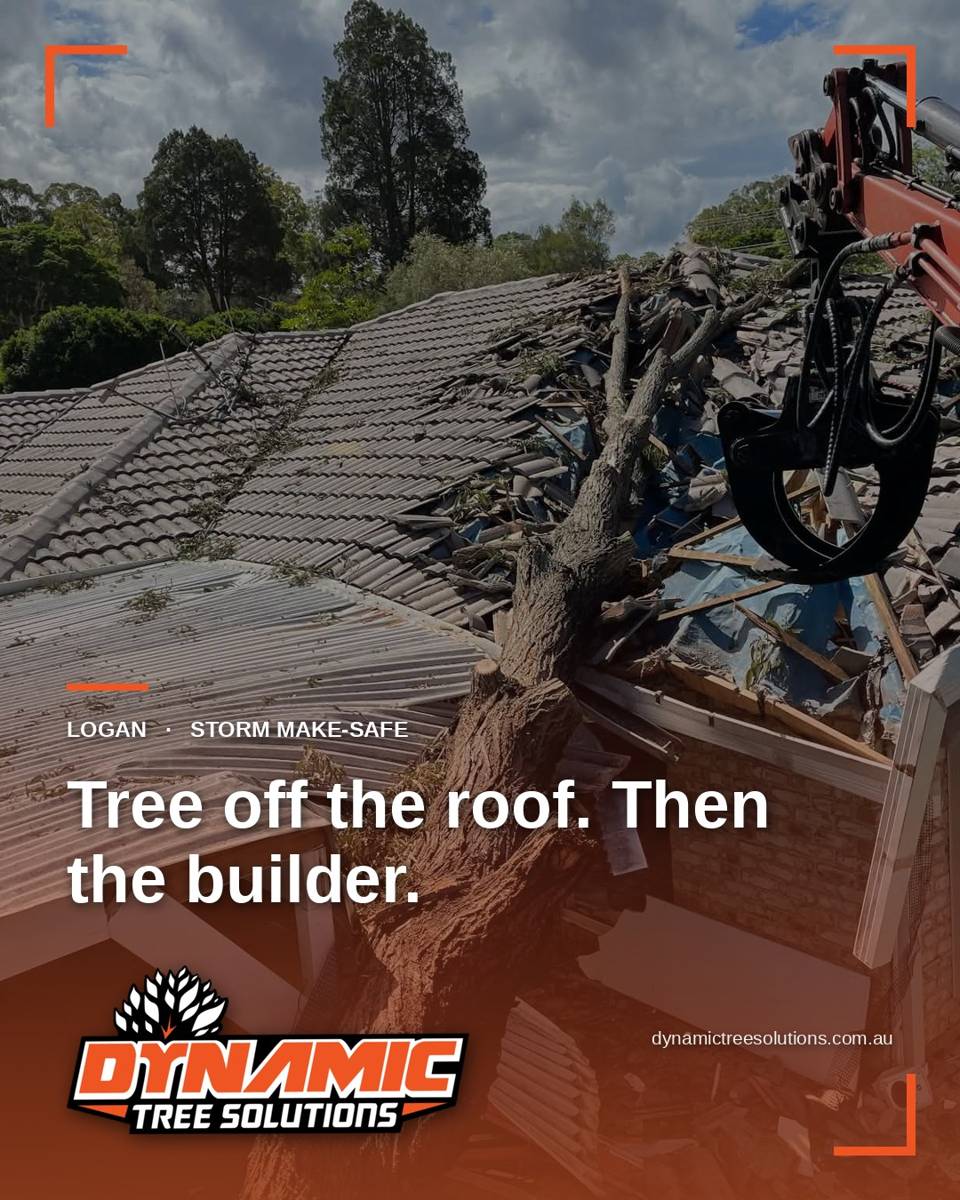
Make safe tree removal is the emergency job that gets a fallen tree off your house, shed or driveway and takes down anything still hanging, so the damage stops getting worse and the builder can start. It is the first thing that happens on a storm claim, it is usually what the insurer pays for, and it is not the same as removing the whole tree. A week on from the Logan supercell, here is who does what and in what order.
Since Wednesday 11 November our crews have been lifting trees off roofs from Crestmead and Marsden down to Jimboomba and Logan Village, and the same three questions come up at every job: who do I ring first, what will insurance cover, and why is the bloke from the builder saying “make-safe only”. This post answers all three. The short version of what to do on the night is in our Logan storm tree damage and insurance guide; this one is about how the claim actually runs once the rain stops.
What does “make safe” mean on a storm claim?
Insurers use the phrase for the emergency repairs that stop further damage before the real repair is scoped: a tarp on the roof, a fence propped, a tree off the house. The Insurance Council of Australia’s advice after any disaster is to make the property safe and secure first, keep the receipts, and lodge the claim as soon as you can.
For a tree, a make-safe means three things. The weight comes off the structure. Anything still hanging in the canopy or leaning on the house comes down. The site is left clear enough for the roofer or the carpenter to work. What it doesn’t automatically include is the rest of the tree, the stump, or the brush spread across the yard. Those are separate lines, and whether they’re covered depends on your policy.
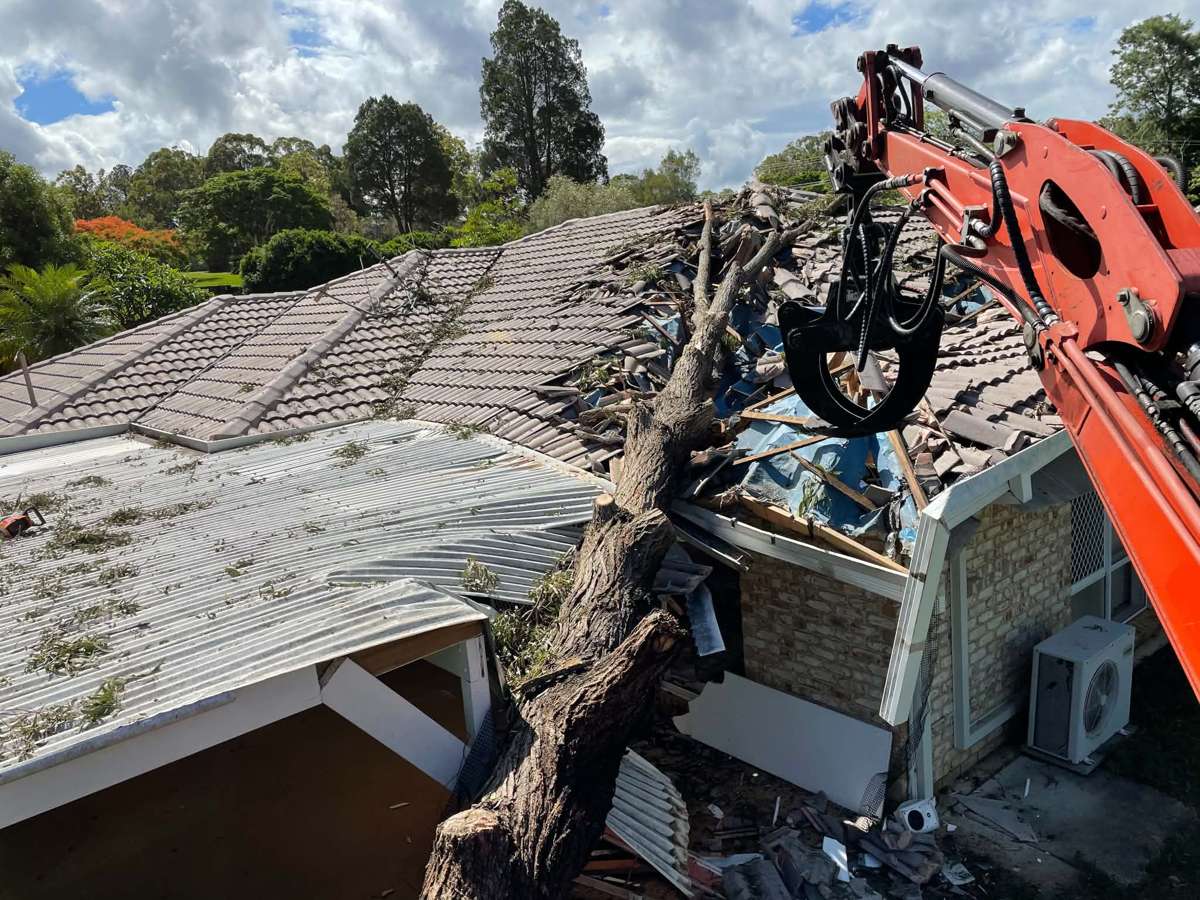
Who do I ring first: Energex, the insurer or the arborist?
In this order, and don’t skip a step.
- 000 if anyone is hurt or trapped.
- Energex on 13 19 62 if a line is down or the tree is in the wires. Nobody touches it until the line is made safe, and that includes us. Energex reported more than 400 lines down across the south-east after the 11 November cell and crews were still restoring power days later.
- Your insurer, to lodge the claim and get a claim number. Some insurers want to send their own builder; most are happy for you to arrange the make-safe yourself if water’s coming in. Ask, and write down what they say.
- A qualified arborist for the make-safe. Photos first, then the tree comes off.
- The builder for the tarp and the repair. They can’t start until the tree is gone.
Where it goes wrong is step three. People wait for the insurer to ring back before calling anyone, the roof stays open through the next cell, and the water damage ends up costing more than the tree. If the insurer’s queue is long, arrange the make-safe, keep the invoice and the photos, and claim it back.
Will insurance cover the tree removal?
Most home policies cover removing the part of the tree that has damaged an insured structure, because that’s what has to happen before the repair. What’s often not covered: taking out the rest of the tree, grinding the stump, clearing trees that fell without hitting anything, and work on the neighbour’s tree. Every policy is different, so read the PDS or ask, and get the arborist to quote the covered and uncovered parts as separate lines. We write ours that way on every storm job for exactly this reason. We’ve covered the detail in does insurance cover tree removal after a storm.
This is a big event. The Insurance Council of Australia declared the November storms a Significant Event, and by 16 November insurers had taken more than 4,600 claims, mostly fallen trees, damaged roofs and fences, and water in homes. Logan has now had eight declared insurance events since 2022. Assessors are busy, which is why the paperwork below matters.
How do insurance builders and make-safe crews fit together?
When a claim is lodged with a big insurer, the repair usually goes to one of their panel builders, a building or restoration company that manages the whole job. IAG said its partner builders were doing emergency make-safe work on its worst-hit Logan properties from the Wednesday night. The builder then brings in the trades, and the tree crew is one of them. So on a lot of storm jobs we’re not working for the homeowner at all; we’re working for the builder, on a purchase order with the claim number on it, and the builder needs our invoice, photos and insurances to go straight into the file.
If you’re the homeowner, that’s worth knowing for one reason: the builder’s tree contractor may be flat out in a week like this. You’re allowed to ask the builder whether you can use your own arborist for the make-safe, and most will say yes if the paperwork is right. If you’re a builder reading this with a Logan allocation and no tree crew, our make-safe tree removal page lists what we send with every job.
What paperwork does the assessor want?
| Item | Why it matters |
|---|---|
| Dated photos before anything is touched | Wide shot, the damage, inside if water’s in. This is the evidence the whole claim rests on. |
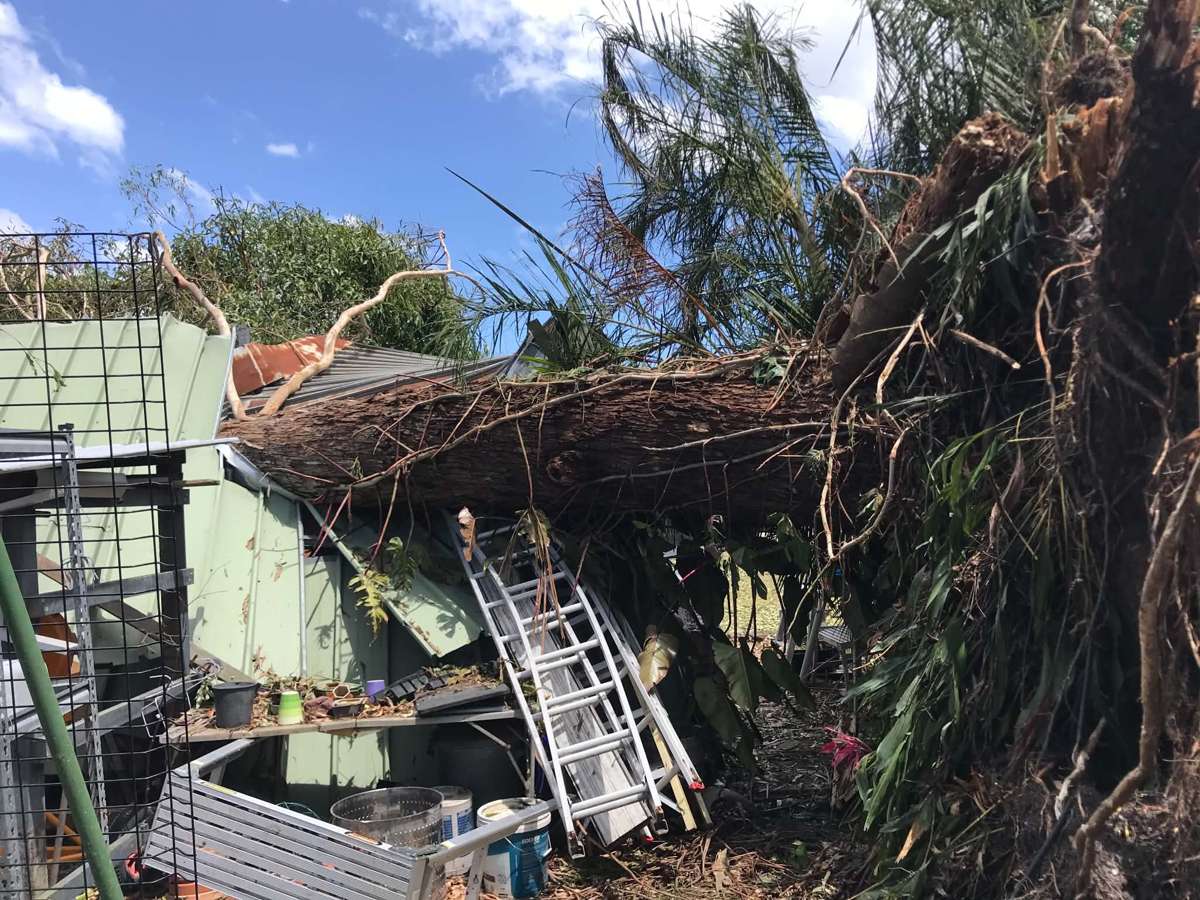
| A note on how the tree failed | Root plate out of wet ground, stem snapped, limb torn out. The assessor wants cause, and “storm” isn’t a cause. |
| Itemised invoice | Make-safe, removal, stump and clean-up on separate lines, with ABN and GST and the claim number on it. |
| Certificates of currency | Public liability and WorkCover. The builder won’t let an uninsured contractor on a claim site, and neither should you. |
| Arborist report, if asked | An AQF Level 5 report on cause of failure, for disputed claims, neighbour’s trees and council trees. See what an arborist report for an insurance claim needs. |
What’s the one thing people get wrong?
Letting someone who door-knocked do the make-safe. IAG’s property claims boss put out a warning the day after the storm about “disaster chasers” working storm-hit streets, some claiming to represent the insurer, and told people to talk to their insurer before agreeing to any unsolicited repair. We’ve seen it in Regents Park, where a roof came off, and down through Chambers Flat and Logan Reserve, where the flooding was. The test is simple: ask for the ABN, the certificate of insurance and the arborist qualification, and ask for all three before anyone starts a saw. A real local crew has them in the truck.
Is a make-safe the end of it?
No. The tree that’s still standing next to the one that fell has just been load-tested by the same wind in the same wet ground, and some of them have moved. After the make-safe, walk the block: soil heaved on one side of a trunk, a lean that wasn’t there a fortnight ago, pale torn timber in the canopy, limbs hanging on a strip of bark. Any of those, get it looked at before the next cell; the forecasters have been warning of more severe storms through the back half of November. A visual tree assessment is quick and it’s what the insurer will want if that tree goes over later.
Tree on the house, shed or driveway? Call 1300 239 626 or send your suburb and a photo through the quote form. We triage by risk and ring back in order. Builders and adjusters: put the claim number in the message.
Frequently asked questions
What is make safe tree removal?
The emergency work that gets a fallen tree off a house, shed, fence or driveway and takes down anything still hanging, so the damage stops getting worse and the builder can start the repair. It is the first job on a storm claim and it is not the same as removing the whole tree, which is usually quoted separately.
Who pays for a make-safe after a storm?
Normally your home insurer, where the tree has damaged an insured structure. Lodge the claim first and get a claim number; if rain is coming in and you can't wait, arrange the make-safe yourself, keep the invoice and photos, and claim it back. Removing the rest of the tree and the stump is often not covered, so ask for those as separate lines.
Do I need the insurer's permission before removing a tree from my roof?
Ring them first and get a claim number, because some insurers want to send their own builder. Most will tell you to make the property safe straight away and keep the receipts. Take photos before anyone touches the tree either way.
What is an insurance builder?
A building or restoration company on an insurer's panel that manages the repair on a claim. They bring in the trades, including the tree crew, and need each contractor's photos, itemised invoice and insurances for the claim file. You can usually ask to use your own arborist for the make-safe if their paperwork is in order.
Can I cut the tree off the roof myself?
Don't. A trunk resting on a roof is under load, and cutting it in the wrong place drops it through the ceiling or onto you. Anything near a powerline is off limits to everyone but Energex and authorised contractors. Ground-level debris you can move; anything on a structure or above head height needs rigging and a qualified crew.
How long does a make-safe take to arrange after a big storm?
Crews triage by risk in a storm week: a tree on an occupied house with water coming in goes first, a tree on a back fence may wait a day or two. Send photos and your suburb so you can be placed on the list properly, and ask the crew where you sit on it.
