
You have 0 items in your cart
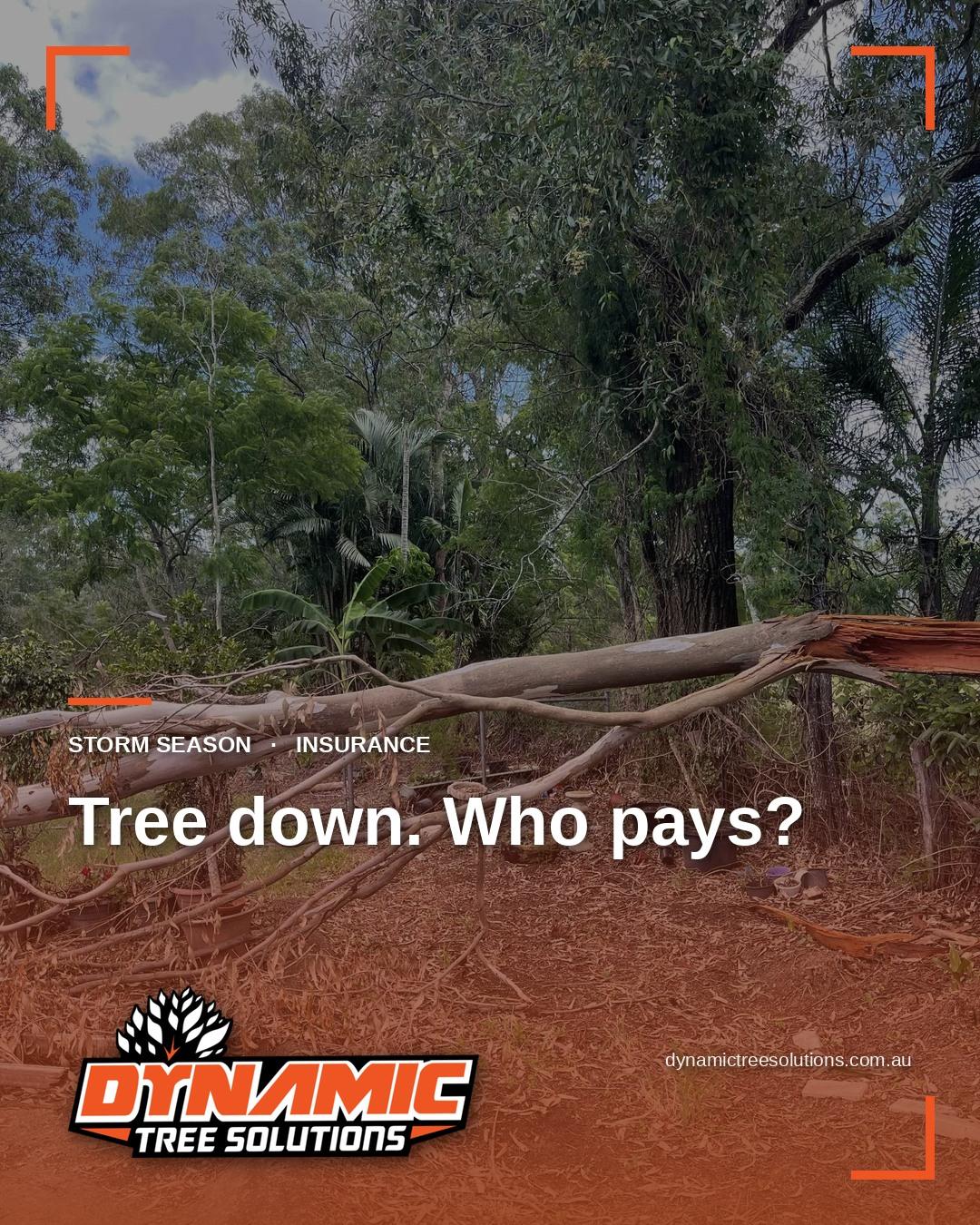
Does insurance cover tree removal after a storm? Sometimes. Most Australian home policies pay to remove a tree only when it has damaged something the policy insures: the house, a shed, a fence, a carport. If the tree came down in a storm and hit nothing, removing it is usually your cost. Every policy is different, so the Product Disclosure Statement (PDS) and a call to your insurer are the only answers that count.
That is the short version. The longer version matters, because the difference between a claim that gets paid and one that gets knocked back often comes down to what you did in the first hour after the storm. We do a lot of storm work across Brisbane’s south side, Logan and Ipswich, and we have watched plenty of claims go both ways. Here is what we have learned from the end of the chainsaw.
One thing up front: we are arborists, not insurers or lawyers. This is general information from doing the job, not advice about your policy.
Does insurance cover tree removal after a storm?
Usually only when the tree caused insured damage. The logic insurers use goes like this. Storm damage to the building is the insured event. Getting the tree off the building is part of fixing that damage, so it is covered. If the tree is lying on the lawn with nothing underneath it, there is no insured damage, so there is nothing to claim.
The Financial Rights Legal Centre puts it plainly: some policies cover removal costs only if the tree damages the insured home or contents, and if a fallen tree damages nothing, the owner may have to pay to remove it.
A few things usually sit on the covered side of the line:
- A tree or limb through the roof, gutter, fence, pergola, shed or carport.
- Debris removal that is part of repairing that damage.
- Damage done by the roots of a tree that has gone over in the storm (the root plate lifting a path or a pipe).
And a few that usually sit on the not-covered side:
- A tree that fell and hit nothing.
- The stump and roots left in the ground after the tree is dealt with.
- Pruning or removing a tree before it fails. Insurers do not pay for prevention, even if an arborist says the tree is a risk.
- A tree that was already dead, hollow or clearly failing. Some insurers call that lack of maintenance rather than storm damage.
That last point is the one that catches people. If the gum had a dead top for two years and you have the photos from the neighbour’s barbecue to prove it, the assessor will see them too. A storm did not break a sound tree. It finished off a sick one.
Who pays for tree removal after a storm if it is the neighbour’s tree?
This is the question we get asked most on site, usually by two people standing on opposite sides of a flattened fence.
In most cases a healthy tree that falls in a storm is treated as nobody’s fault. The neighbour whose house got hit claims on their own policy. The tree owner is not automatically on the hook just because it grew on their side. The fence is normally split between the two of you, and each insurer covers its own customer’s half.
It changes if the tree owner knew the tree was dangerous. A tree that was leaning further every year, dropping big dead limbs, or had been flagged for removal by an arborist is a different story. If you have one of those on your block in Rochedale South or Underwood, where the old gums over the back fences are getting on a bit, the cheapest insurance you will ever buy is dealing with it before storm season, not after.
What does the insurer ask for after storm damage from a tree?
Every claim we have seen come through cleanly had the same four things.
- Photos before anything moved. The tree on the roof. The limb on the fence. Wide shots and close-ups. Take them from the ground, not from a ladder. If the tree is on a powerline, stay away from it altogether and report it to Energex.
- The date and the weather. Note the day and the rough time the storm went through. The Bureau’s warnings and the news reports back you up.
- Itemised invoices. An invoice that says “tree work, one lump sum” makes an assessor’s job hard. Ours split out the make-safe, the removal off the structure, the clean-up and anything else, so the covered part is obvious.
- An arborist report, if asked. If there is any argument about whether the tree was sound before the storm, the insurer may want an arborist report from someone with the qualification to write one. Our AQF Level 5 arborists do these every week.
Keep the claim number, the name of every person you speak to and what they said. Boring, but it wins arguments later.
Should you remove the tree before the insurer has looked at it?
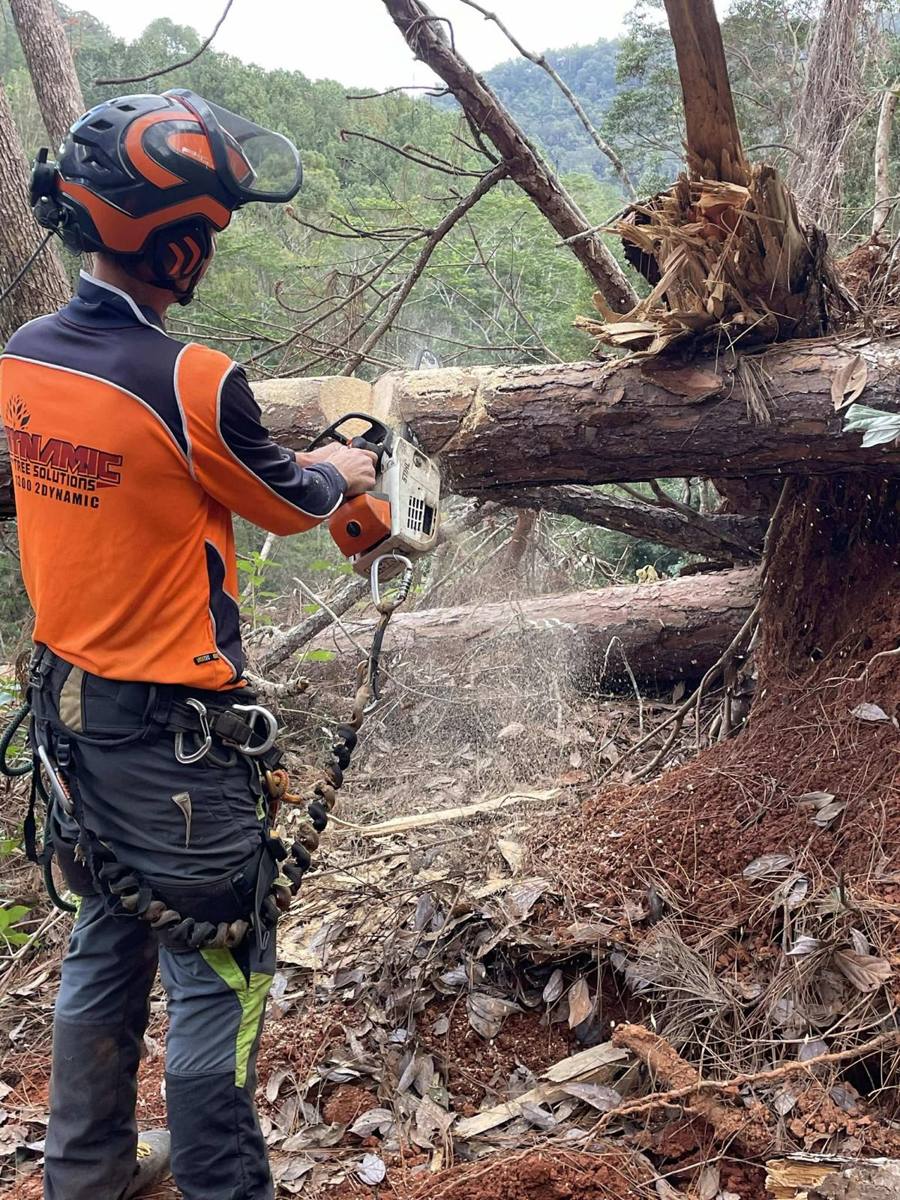
Make it safe, then stop. Most policies let you take reasonable steps to prevent further damage, and most insurers want you to. That means getting the limb off the roof so the rain stays out, tarping the hole, and clearing anything that is still hanging over people. It does not mean having the whole tree ground into mulch before the assessor turns up.
The crew does the make-safe and photographs every stage. The rest of the job waits until the insurer has said yes, unless the tree is a danger to someone right now. The way we handle a split gum limb hanging over a bedroom in Forest Lake is the same every time: the hanging section comes down the same day, the split gets photographed so the insurer can see it is fresh wood, and the standing trunk waits for the claim. That order keeps everyone safe and keeps the claim clean.
If you are not sure what your policy allows, ring the claims line before the crew arrives. Most insurers run them around the clock in storm season.
What if the tree is dead, hollow or was already a problem?
Be honest with the assessor, because the tree will be. A gum with a hollow trunk shows it in the break. A dead tree has no leaves and dry, brittle wood. Assessors and the arborists they send out see hundreds of these and know what a healthy fracture looks like.
If you have a tree like that now, in October, deal with it. We are in the first weeks of storm season and the forecast for this summer is hot and dry, which means stressed gums and sudden limb drop on still afternoons as well as the usual spring hail. Have an arborist look at anything that worries you. A dangerous tree removal now costs you the job. The same tree through the roof in November costs you the excess, the stress, and possibly a knocked-back claim.
What about trees on powerlines or on the road?
Different rules, different people. A tree on the street powerlines is Energex’s problem and they clear it for free. The service line from the pole to your house is yours, and only an authorised contractor can work near it. Nobody untrained goes within 3 metres of a line, full stop. Energex has the detail on its trees and powerlines page.
A tree across a public road or footpath is usually the council’s call. Report it and let their crews, or contractors like us working for them, deal with it. Our disaster response work after the big storms is mostly this kind of job.
The plain checklist
| Situation | Usually covered? | What to do first |
|---|---|---|
| Tree or limb on the house, shed, fence or carport | Yes, under building cover | Photos, then make-safe, then call the claims line |
| Tree fell in the yard, hit nothing | Usually no | Get a quote. It is your job to pay for |
| Neighbour’s healthy tree on your house | Your own policy, usually | Claim on yours. Talk to the neighbour about the fence |
| Dead or failing tree finally came down | Often disputed | Be upfront. Expect questions |
| Stump and roots left behind | Usually no | Separate job, separate quote |
| Tree on powerlines | Not an insurance job | Stay clear and report it to Energex |
Check your own PDS against this. Policies change, and “usually” is doing a lot of work in that table.
If the tree is actually on the house right now, start with our step-by-step on what to do first when a tree falls on your house, then come back to the claim.
Need a crew after the storm?
Our emergency tree removal crews work through storm season across Brisbane, Logan and Ipswich. We make it safe, photograph everything, and invoice it the way insurers want to see it. Call the office on 1300 239 626 or send the details through our quote form.
If the tree landed on the dividing fence rather than the house, there is a neighbour side to the claim as well. See Tree fell on the fence: who pays?
Frequently asked questions
Does homeowners insurance cover tree removal after a storm?
Usually only when the tree has damaged something the policy insures, such as the house, a shed, a fence or a carport. Removing the tree is then treated as part of repairing that damage. Check your PDS, because wording differs between insurers.
Does insurance cover tree removal from storm damage if the tree hit nothing?
Usually not. If a tree falls in the yard and damages nothing insured, most policies do not pay to remove it. The stump and roots left in the ground are also normally excluded.
Who pays for tree removal after a storm if it was the neighbour's tree?
In most cases each household claims on its own policy, and a shared fence is split between the two. A healthy tree falling in a storm is generally treated as nobody's fault. It can be different if the owner knew the tree was dangerous and did nothing.
What does the insurer ask for after a tree falls on the house?
Photos taken before anything was moved, the date and time of the storm, itemised invoices for the make-safe and removal, and sometimes an arborist report on the tree's condition before it failed.
Can I remove the tree before the insurance assessor has seen it?
Make it safe and stop. Most policies let you take reasonable steps to prevent further damage, such as getting a limb off the roof and tarping the hole. Photograph everything first and ring the claims line before the full removal if you can.
