
You have 0 items in your cart
Tree fell on fence, who pays? In Queensland, if a healthy tree came down in a storm and flattened the dividing fence, the repair is normally a shared cost between the two neighbours, the same as any other fence job, and most people simply claim it on their own home insurance. The owner of the land the tree was growing on only tends to wear the whole bill when they knew the tree was dangerous and left it. If the tree is still half-standing and leaning on the fence, that part is urgent and nobody should be arguing about money under it.
That is the short version. The longer one is below, written by an arborist, not a lawyer. We spend every storm season from October to March pulling gums off fences from Brisbane’s southside to Logan and Ipswich, and we hear this question at nearly every one. For your own situation, read your policy and, if it turns ugly, get legal advice.
Tree fell on fence who pays: why is the answer “it depends”?
Because three different sets of rules land on the same pile of timber at once.
The first is the tree rule. Queensland’s Neighbourhood Disputes (Dividing Fences and Trees) Act 2011 says the “tree-keeper” is responsible for the tree, and the tree-keeper is the owner of the land the tree is wholly or mainly growing on. The second is the fence rule, in the same Act, which says neighbours usually share the cost of a dividing fence equally. The third is your insurance policy, which has its own ideas about storms, fences and tree removal.
Most of the time they line up: the storm did it, nobody was negligent, the fence gets fixed and the insurers sort it out between themselves. The arguments start when a tree everyone knew was dead, hollow or leaning finally lets go. Then the tree rule matters a lot more than the fence rule.
Whose tree was it in the first place?
Walk the boundary before you walk to the neighbour’s door. The tree-keeper is whoever owns the land the trunk is mainly on. The Queensland Government’s tree-keeper page spells it out: you are responsible for the whole tree, roots included, and you are expected to make sure it is not likely to seriously damage your neighbour’s property in the next 12 months.
A tree sitting dead on the boundary line is shared: both owners carry the responsibility and the liability. On the acreage blocks around Jimboomba, where the boundary is a few hundred metres of rural fence through regrowth, “whose tree is it” is sometimes a real question, and worth checking the survey pegs before anyone starts pointing.
Does it matter that it was a storm?
Yes, a lot. A healthy tree that fails in a severe storm is an act of nature. Nobody could reasonably have seen it coming, so nobody is at fault, and the fence is repaired like any other fence: shared.
Negligence changes that. If the tree was obviously dead, hollow and full of termites, had been dropping limbs for years, or the neighbour had complained in writing and been ignored, a tribunal can decide the tree-keeper should have acted and order them to pay. QCAT (the Queensland Civil and Administrative Tribunal) can order compensation for damage to land or property caused by a tree, and it specifically weighs up whether a tree posed a risk in an extreme weather event.
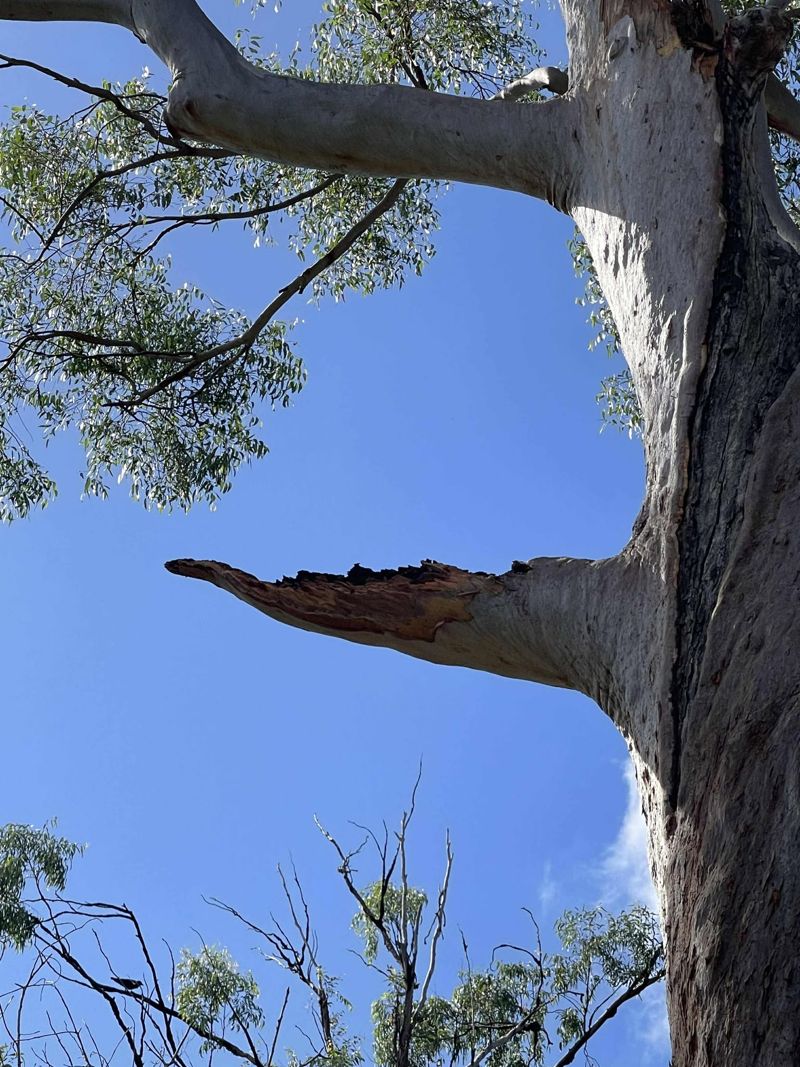
This is where our job overlaps with the argument. When we get called to a tree on a fence, the first thing we look at is the break. Fresh, pale, splintered timber tells one story. Dark, punky wood at the failure point with old fungal brackets on the trunk tells a very different one, and a photo of it is the most useful thing you can hand to an insurer or a tribunal. An arborist report on the failed tree settles most of these before they get anywhere near QCAT.
What do the Queensland dividing fence rules actually say?
The fence side of the Act is short enough to read over a coffee. The Queensland Government’s fence owner page puts it this way: neighbours usually contribute equally to the cost of building and maintaining a dividing fence, and each is liable for half the cost of fencing work on a “sufficient” fence. If one of you wants something flasher than a sufficient fence, that person pays the extra.
One line in there matters for trees. If an owner, or someone they let onto their property, damages the dividing fence, that owner has to restore it. A contractor who drops a limb through the fence while working for you is on you. A storm is not someone you let onto your property.
If the neighbour will not play ball, the Act gives you a paper trail rather than a shouting match: a notice to contribute for fencing work, or a notice for urgent fencing work where it cannot wait (dogs out, kids next to a main road). Both templates are on the Queensland Government site. Keep copies. If it still goes nowhere, QCAT decides what fence gets built and who pays what share. Pool barriers are regulated separately and sit outside these rules, so a pool fence under a tree is a safety job first and a cost argument a long way second.
Will my home insurance cover a tree on the fence?
Usually, with conditions. Most home and contents policies cover storm damage to fences, but fences are a favourite spot for limits and exclusions: caps on what is paid, fences already in poor condition, and an excess that can be close to the cost of a couple of panels. Tree removal is the other one to read closely. Many policies only cover removing the tree if it damaged something insured, and some will not pay to remove a tree that is still standing.
Because a dividing fence is jointly owned, each neighbour normally claims their half on their own policy. If one insurer thinks the other side was negligent, they chase each other, not you. Photograph everything before anyone touches it, get the tree made safe, and let the insurer know early. The detail is in does insurance cover tree removal after a storm. Read your Product Disclosure Statement rather than anything a tree bloke writes on the internet; policies differ more than people expect.
What if it is the neighbour’s tree and they will not talk?
Start by assuming they are as rattled as you are. The usual scene the morning after a big cell goes through Shailer Park, with its old spotted gums on the bigger blocks, is two neighbours standing either side of a Colorbond fence that is now a Colorbond carpet, both working out how much this is going to hurt. Most of those conversations go fine. The ones that do not usually fail because someone opened with “your tree, your problem”, which is not what the law says and is a poor start to twenty more years of living next to each other.
A sensible order of events:
- Photograph the tree, the fence and the break from both sides, with a wide shot showing where the trunk stands.
- Get the dangerous part made safe. Do not wait for a cost agreement with a limb hanging over the trampoline.
- Talk to the neighbour in person, then put what you agreed in writing, even a text.
- Both ring your insurers and let them talk to each other.
- If stuck, free mediation through the Queensland Government’s Dispute Resolution Centres comes before QCAT, and the tribunal will want to see you tried it.
Two things not to do. Do not cut, poison or remove any part of the neighbour’s tree that is still on their side of the line, because that is damaging their property and it hands them the argument. And do not go near a limb resting on the service line to the house. Only authorised contractors work near powerlines, and a branch across a live line is an Energex or 000 call before it is an arborist call.
What if the tree is still standing but half of it is on the fence?
That one keeps us busy, and it is more dangerous than a tree already flat on the ground. A split trunk with a limb hung up on a fence is under load in ways you cannot see. Fences bend, posts snap, the limb rolls. Every storm season we see someone with a new chainsaw trying to “just trim it back” from a stepladder.
Leave it. Call it in as a dangerous tree rather than a tidy-up. A crew will rig the hung-up section, take the weight off the fence in pieces, then look at what is left and whether it is worth keeping. Half the time it is fine with a proper reduction. The other half, it was already compromised and the storm finished the job early.
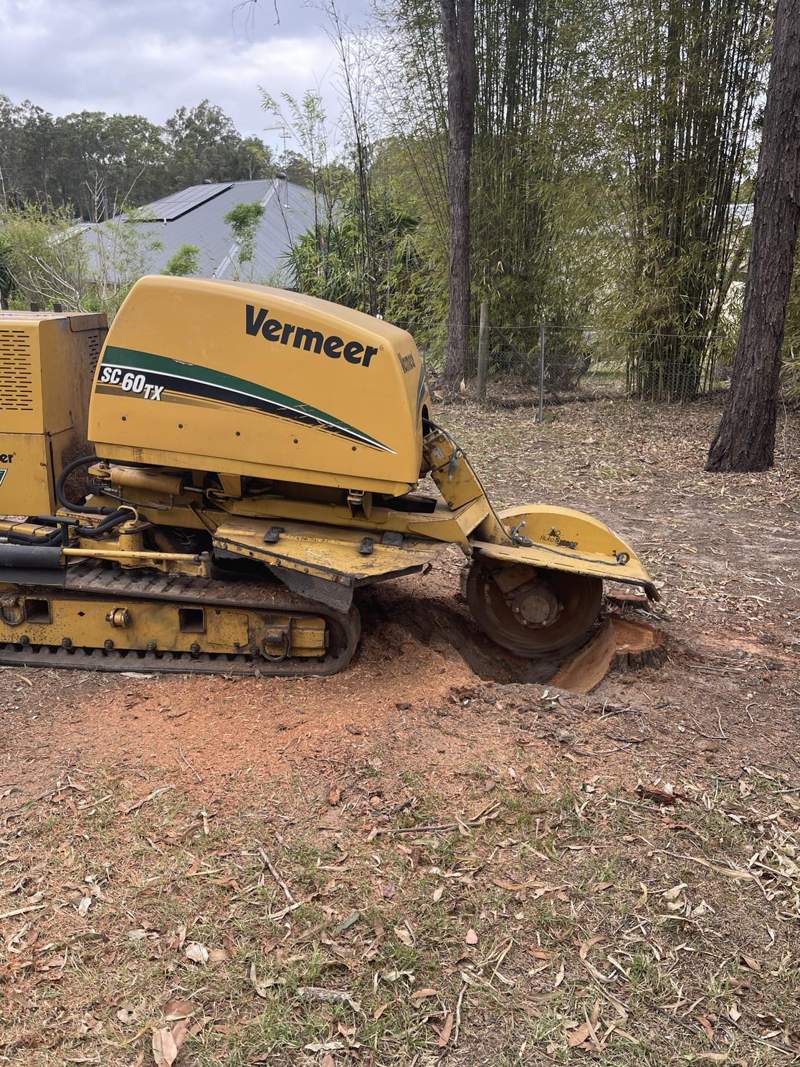
Once the tree is down, the stump is the last bit of the argument. A stump on the fence line is awkward for the fencing contractor, keeps sprouting, and invites termites to the new posts. Stump grinding along a boundary is a quick job while the fence is open and a fiddly one once the new panels are in.
How do you stop this being next year’s argument too?
The best fence repair is the one you never need. Walk your boundary before storm season and look at your trees the way a neighbour would: dead wood over the fence, cracked limbs, bark pulled into a join, fungus at the base, soil lifting on one side, a lean that was not there last year. Those are the things that turn “act of nature” into “you knew”.
The tree-keeper rule cuts both ways. You are expected to cut back branches overhanging your neighbour’s land, and your neighbour can lean on you about limbs likely to damage their place. The practical side is in our guide to fence line tree trimming, etiquette and the law, including the bit where you can trim overhanging branches yourself and the bit where you really should not.
On the newer estates and small acreage around Greenbank, many boundary trees are remnant gums left standing when the block was cut, with roots disturbed by a house pad on one side and a shed on the other. Those are the trees that go over in the first proper storm. A pre-season dead-wooding and weight reduction is a short job. Two fences, a trampoline and a tribunal application is not.
If a tree has come down on your fence, or is hanging over it right now, call 1300 239 626 and we will get a crew out. If you would rather send photos first, use the quote form and the office will ring you back.
Frequently asked questions
My neighbour's tree fell on my fence. Who pays?
In Queensland, if the tree was healthy and came down in a storm, the dividing fence is normally a shared repair between the two owners, and most people claim their half on their own home insurance. The neighbour (the tree-keeper) is more likely to wear the whole cost if the tree was obviously dead, hollow or dangerous and they knew about it. If you cannot agree, the Queensland Government has notice templates for fencing work, free mediation is available, and QCAT can decide as a last resort.
Does home insurance cover a tree falling on a fence?
Most home and contents policies cover storm damage to fences, but check the Product Disclosure Statement for fence limits, exclusions for fences already in poor condition, your excess, and whether tree removal is covered. Many policies only pay to remove a tree that has damaged something insured. Photograph everything before it is moved and tell your insurer early.
If a tree falls on the fence, who is responsible in Queensland?
Under the Neighbourhood Disputes (Dividing Fences and Trees) Act 2011, the tree-keeper is the owner of the land the tree is mainly growing on and is responsible for the whole tree. For the fence itself, neighbours usually contribute equally to repairs to a sufficient dividing fence. A tree sitting on the boundary line is shared by both owners.
Can I cut the neighbour's tree that fell on my fence?
You can clear the part that is on your side of the line so the fence can be repaired, but do not cut, poison or remove the standing part of the tree on their land, and never touch a limb resting on a powerline or the service line to a house. If the tree is still standing and hung up on the fence, it is under load and should be made safe by an arborist.
Who pays if a council tree falls on my fence?
Trees in council parks and road reserves sit outside the neighbour-to-neighbour process. Contact the council's claims or customer service team, give them photos and the date of the storm, and claim the fence on your own insurance in the meantime. Your insurer may pursue the council if there is evidence the tree was known to be dangerous.
