
You have 0 items in your cart
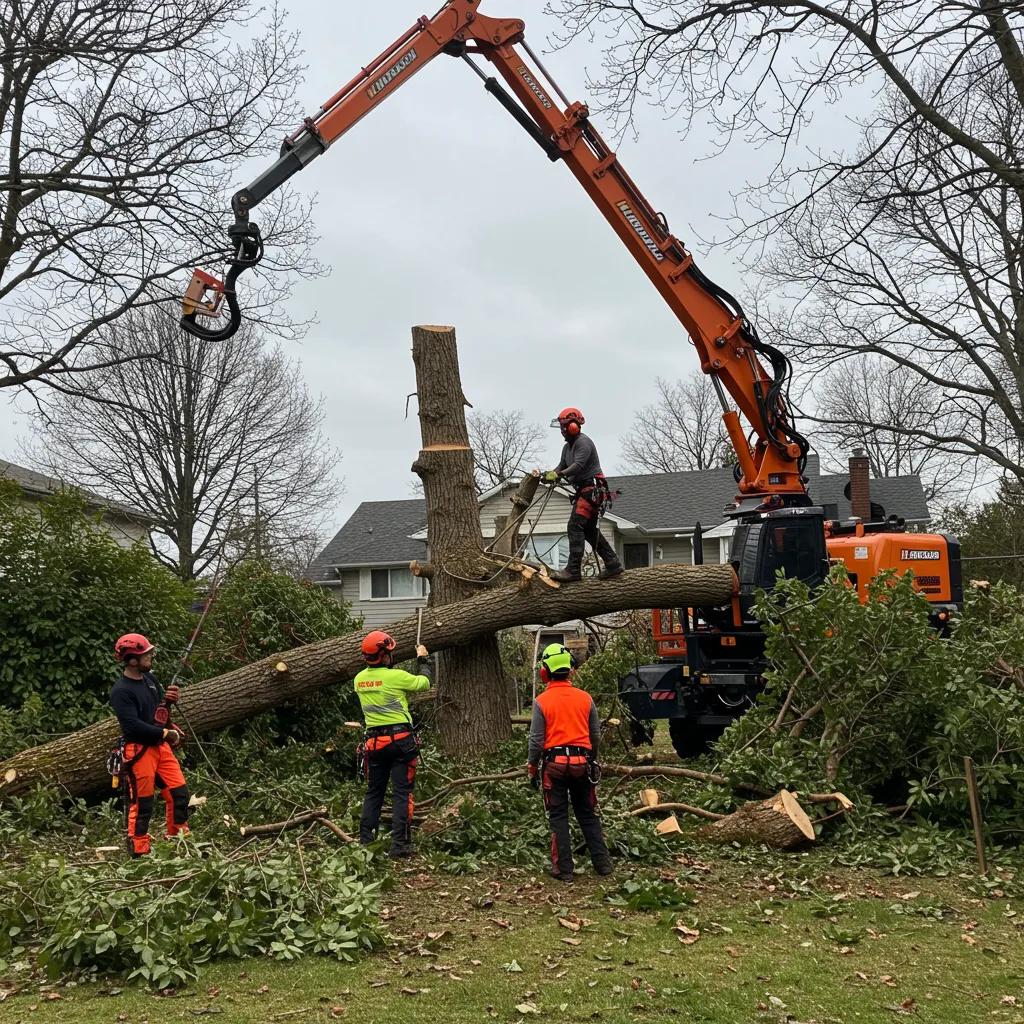
professional tree removal Springfield demand has grown faster than almost any other Ipswich-area suburb over the past decade. Rapid residential growth across Springfield, Springfield Lakes, Springfield Central, Bellbird Park, Brookwater, Camira, Augustine Heights, Goodna, and the wider Greater Springfield region means thousands of new homeowners are facing the same question: which trees on my property are protected, what does tree removal Springfield actually cost, and how do I find a qualified Springfield arborist? This 2026 guide answers all of it.
Springfield is a planned masterplan community sitting within the Ipswich City Council planning rules local government area. That means Ipswich Council tree removal rules apply across the entire Springfield region — and they’re stricter than many Springfield property owners realise, especially in newer estates where developer-planted feature trees are often already protected by the time a home settles.
Why Tree Removal Springfield Demand Is Different
The Springfield growth corridor has unique characteristics that affect springfield tree services requirements:
- Developer feature trees — masterplan estates retained existing canopy trees and planted thousands of new ones. Many are now mature enough to meet protected status.
- Koala habitat areas — significant parts of the Springfield region are mapped under Queensland’s koala protection framework.
- Waterway corridors — Six Mile Creek, Bundamba Creek, and tributaries run through the region.
- Powerline easements — Energex transmission corridors cut through residential areas.
- Body corporates — many Springfield estates have shared landscapes managed by body corporates.
- Acreage transitions — older 2 ha+ rural-residential properties remain in pockets, with different vegetation rules.
Ipswich Council Tree Removal Rules Applying to Springfield
Springfield falls within the Ipswich City Council planning rules local government area. Ipswich Council tree removal rules apply across the suburb under the Ipswich Planning Scheme. The key triggers for Council approval process are:
- Trunk diameter of 40 cm or more at 1.3 m height
- Trees within mapped waterway corridors
- Trees in mapped biodiversity overlays or significant vegetation areas
- Trees forming part of mapped koala habitat
- Street trees on Council road reserve
- Trees subject to specific approval conditions from the original development application
For the complete permit process, costs, and timeline see our dedicated Ipswich Council tree removal guide.
Tree Removal Springfield Cost Guide
Springfield tree removal cost guide in 2026 closely mirrors broader Ipswich pricing:
- Small tree (under 5 m) — $300 to $700
- Medium tree (5–15 m) — $700 to $2,800
- Large tree (15–25 m) — $2,500 to $5,500
- Very large tree (25 m+) — $5,000 to $15,000+
- Stump grinding Springfield — $80 to $400 per stump
- arborist reports for Ipswich DA — $400 to $1,200
- Ipswich Council application fee — $300 to $1,500
Key Springfield-specific cost factors include access on narrow estate roads, proximity to body corporate-managed common areas, and the higher prevalence of trees near power lines or buildings due to compact lot sizes. See our complete tree removal cost guide for the wider breakdown.
Springfield Arborist — What to Look For
A qualified Springfield arborist should bring:
- AQF Level 3 at minimum for climbing/cutting crew, AQF Level 5 for consulting work
- $20 million public liability insurance
- WorkCover Queensland coverage
- Modern equipment — cranes, EWPs, chippers
- Ipswich Council DA experience
- Itemised written quotes
- Industry membership with Arboriculture Australia or QArbor
For the full hiring checklist, see our guide on how to choose a certified arborist.
Tree Lopping Springfield — What Lopping Really Means
Tree lopping Springfield is the colloquial term for what professional arborists call tree pruning or tree reduction. The word “lopping” is often used loosely — sometimes by operators who literally lop the tops off trees, which is not compliant with the Australian Standard.
Genuine tree lopping in Springfield should follow AS 4373-2007 — proper crown reduction with appropriate target pruning rather than indiscriminate topping. Our tree pruning service performs all work to AS 4373.
Stump Grinding Springfield
Stump grinding Springfield is the most common follow-on service after tree removal. Stumps left in place sprout regrowth, harbour termites, and prevent lawn or paving restoration.
Costs typically run $80 to $400 per stump depending on diameter. We grind 150–300 mm below ground level — ready for grass or topsoil restoration. See our stump grinding service for more.
Tree Pruning Springfield — When You Need It
Tree pruning Springfield work is most commonly requested for:
- storm season tree safety preparation — removing weak limbs and reducing wind sail area
- Power line clearance — typically requires Energex coordination
- Roof and gutter clearance — keeping branches off buildings
- Crown lifting — clearing the lower canopy for vehicle access
- Light penetration — opening canopy for solar panels or garden beds
- dead wooding — removing hazardous deadwood
- Formative pruning — establishing good structure in young trees
Pruning under 30% of canopy in any 12-month period is generally exempt from Ipswich Council permits, provided it is performed to AS 4373.
Emergency Tree Removal Springfield
Emergency tree removal Springfield requests spike during storm season tree safety (October–April). Common scenarios include:
- Trees uprooted by wind
- Limbs broken and hung in the canopy
- Trees leaning over buildings after root failure
- Trees split by lightning
- Storm-damaged trees blocking driveways or roads
Genuine emergency removal is exempt from the Council permit process. Our 24/7 dangerous tree removal team responds across all Springfield-area suburbs.
Springfield Lakes Tree Services
Springfield Lakes tree services have one significant difference from older Ipswich suburbs: the high number of small to medium block sizes with tightly-packed homes. Tree removal here usually requires:
- Crane support to lift sections out over rooflines
- Section-by-section dismantling rather than free-felling
- Higher attention to retained-tree protection on neighbouring lots
- Coordination with body corporates where common-area trees are involved
- More frequent power-line proximity issues
Our team handles all of these scenarios as standard. Crane support adds typically $1,800 to $4,500 to a Springfield Lakes job but is the only safe approach for many constrained sites.
FAQ: Tree Removal Springfield
Do I need a permit to remove a tree in Springfield?
You need an Ipswich City Council permit if the tree has a trunk diameter of 40 cm or more at 1.3 m height, is in a mapped overlay, or is part of an original development approval. Our Ipswich Council tree removal guide covers the full process.
How much does tree removal Springfield typically cost?
Residential tree removal in Springfield typically ranges from $300 for a small tree to $5,500 for a very large tree. Crane support adds $1,800 to $4,500. Stump grinding adds $80 to $400 per stump.
Can I get an emergency tree removed without Council approval?
Yes — genuine emergency removal where a tree is down or in imminent failure condition is exempt. Document thoroughly with photos and notify Council afterwards.
Are koala habitat trees in Springfield specially protected?
Yes. Trees mapped under Queensland’s koala habitat overlays require additional state-level approvals through the Department of Environment, Science and Innovation in addition to Ipswich Council approval.
Do you service all Springfield suburbs?
Yes — we service Springfield, Springfield Lakes, Springfield Central, Bellbird Park, Brookwater, Augustine Heights, Camira, Goodna, and the surrounding Greater Springfield area.
Get a Free Tree Removal Springfield Quote
Dynamic Tree Solutions provides full-service tree removal Springfield capability — AQF certified arborist, fully insured, modern equipment, and proven Ipswich City Council DA experience. Same-week site visits available across all Springfield-area suburbs.
Service capability includes tree removal and lopping, stump grinding, tree pruning, dangerous tree removal, arborist reports, land clearing, and specialist Springfield tree services.
Call 1300 2DYNAMIC or contact us online for a free, no-obligation quote.
About Dynamic Tree Solutions — Brisbane’s Leading Tree Removal Springfield Specialists
Dynamic Tree Solutions has been operating across South-East Queensland for over a decade, building one of the most respected reputations in the tree removal springfield and broader arboriculture industry. Our team brings together AQF Level 3 climbing and cutting specialists, AQF Level 5 consulting arborists, modern equipment operators, dedicated administrative support, and decades of combined field experience across every kind of tree work imaginable.
We are unusual in the SEQ tree industry because we combine three capabilities most contractors split across separate companies. First, we provide complete operational springfield tree services work — from large commercial removals to single residential pruning jobs. Second, we provide AQF Level 5 consulting and arborist reporting services that meet Brisbane City Council vegetation rules, Ipswich City Council, Logan City Council planning rules, Moreton Bay Regional Council rules, and Scenic Rim Regional Council rules Development Application requirements. Third, we operate our own forestry mulching, chipping, and mulch supply operation that closes the circular-economy loop on every tree we touch.
Our Approach to Tree Removal Springfield
Every tree removal springfield job we undertake follows the same disciplined approach refined over thousands of jobs. Step one is an on-site inspection by an AQF-qualified arborist, who assesses the trees, the site constraints, the council overlays, and the client objectives. Step two is a written, itemised quote covering scope, price, timeframe, payment terms, insurance certificate of currency, and qualifications — issued by email within 24 hours of inspection. Step three is the scheduled work itself, performed to Australian Standard AS 4373-2007 for pruning and AS 4970-2009 for tree protection during construction.
Step four — and the one most contractors skip — is a written sign-off pack documenting what was done, including before-and-after photographs, waste-handling records, and any council compliance documentation. For clients dealing with insurance claims, Council enforcement matters, or QCAT proceedings, that final documentation pack frequently makes the difference between an easy outcome and a drawn-out dispute.
Qualifications, Insurance and Compliance
Our crew holds the qualifications and credentials that Brisbane and SEQ property owners should consider non-negotiable when engaging a tree contractor:
- AQF Level 3 (Certificate III in Arboriculture) — minimum credential for every climbing and cutting crew member
- AQF Level 5 (Diploma of Arboriculture) — held by our consulting team for all report-writing and expert-opinion work
- $20 million public liability insurance — certificate of currency provided in writing with every quote
- WorkCover Queensland coverage for every worker on every job
- Professional indemnity insurance for consulting and reporting work
- Energex Electrically Trained Tree Worker accreditation for power-line proximity work
- Working with Children Checks for school tree services sector engagements
- Industry membership with Arboriculture Australia and the International Society of Arboriculture
- WHS management system meeting Tier-1 contractor accreditation standards for major civil and government work
Service Areas Across South-East Queensland
Dynamic Tree Solutions provides tree lopping springfield and the full range of complementary arborist services across the entire South-East Queensland metropolitan region. Our service footprint covers:
- Brisbane City Council vegetation rules LGA — every suburb from the CBD through to the LGA boundary
- Ipswich City Council LGA — including Springfield, Springfield Lakes, Brassall, Bundamba, Booval, Goodna, Yamanto, Raceview, Karalee, Walloon, Rosewood and all surrounding suburbs
- Logan City Council planning rules LGA — Logan Central, Springwood, Beenleigh, Park Ridge, Greenbank, Jimboomba and surrounds
- Moreton Bay Regional Council rules LGA — Caboolture, Burpengary, North Lakes, Redcliffe, Strathpine, Petrie, Dayboro, Samford and the coastal corridor
- Scenic Rim Regional Council rules LGA — Beaudesert, Boonah, Tamborine, Canungra, Mount Tamborine, Kalbar, Aratula, Cedar Vale and surrounding rural areas
For specific service-area pages, browse our Ipswich tree services, Springfield tree services, Camira tree services, Logan Central tree services, Shailer Park tree services, Greenbank tree services, Jimboomba tree removal, Tamborine tree removal, Woodend tree services, Park Ridge tree services, and Beenleigh tree removal location pages.
Equipment Fleet for Tree Removal Springfield Excellence
Modern stump grinding springfield work demands modern equipment. Sub-hiring cranes, mulchers, and chippers from third parties typically adds 20–30% to project costs and introduces scheduling delays. Our in-house fleet eliminates both problems:
- Truck-mounted EWPs to 23 m working height for high-canopy work
- Multiple-tonne chip trucks for waste handling on residential and commercial sites
- Tracked forestry mulchers with PT-400 and PT-600 heads for acreage and fire-break work
- Skid-steer mounted attachments for civil and site-prep work
- Compact petrol and diesel stump grinders with access through 900 mm side gates
- Large rubber-tracked stump grinders for commercial-scale work
- Modern Husqvarna and Stihl chainsaws maintained on a strict service schedule
- Full climbing kit including Stationary Rope Technique (SRT) and Moving Rope System (MRS) gear
- Two-way radio communication on every job
- Traffic management equipment for road-corridor work
- Full PPE for every crew member including helmet, eye and ear protection, chainsaw chaps, and steel-cap boots
Industry Recognition and Standards
Our work meets and exceeds the standards set by the peak industry bodies. We are members of Arboriculture Australia — the national peak body — and our consulting team holds International Society of Arboriculture (ISA) certifications recognised globally. We also engage with the Queensland Fire and Emergency Services on bushfire-ready landscaping and disaster response work and coordinate with Energex on power-line proximity jobs throughout our service area.
For Council Development Applications, our consulting arborists prepare documentation referencing the relevant statutory framework — including Queensland’s Vegetation Management Act 1999, the Planning Act 2016, and the federal EPBC Act 1999 where threatened ecological communities or species are present.
Customer Reviews and Track Record
Our reputation is built on hundreds of independently verified five-star reviews from Brisbane and SEQ property owners across residential, commercial, body corporate, school, council, and rural sectors. We don’t manufacture testimonials — every review is independently submitted by clients and verifiable on platforms like Google Business Profile and Facebook.
Repeat-customer rates are one of the strongest indicators of contractor quality. Most of our work comes from past clients who’ve used us before, referred us to neighbours, or recommended us to property managers — a track record built one well-executed emergency tree removal springfield job at a time.
Booking Your Tree Removal Springfield Job
Engaging Dynamic Tree Solutions for tree removal springfield, related springfield tree services, or any of our other tree services is straightforward:
- Initial enquiry — Call 1300 2DYNAMIC, email through our contact page, or order direct services like bulk mulch online
- Site inspection — Free for residential jobs; usually scheduled within 5–7 days of initial contact
- Written quote — Detailed, itemised, with all qualifications and insurance documents attached
- Booking confirmation — Date, time, crew details confirmed in writing
- Job execution — Performed to Australian Standard with photographic documentation
- Sign-off pack — Compliance documentation, before-and-after photos, invoice
- Follow-up — Quality check call after job completion
Whether you’re a homeowner planning a small tree removal springfield job, a body corporate managing a complex estate landscape, a developer preparing a major site for civil construction, a council asset manager running a vegetation maintenance program, or an emergency response coordinator dealing with storm damage — our team is structured to deliver the same quality of work across every job category and every property type.
Call 1300 2DYNAMIC today, or request a quote online. We respond to most enquiries within four business hours and arrange site visits within the same week. For storm-event emergency response, our 24/7 line is the same number — call any time, day or night.
Australian Tree Care Industry Standards That Underpin Quality Tree Removal Springfield Work
Quality tree removal springfield work in Australia is built on a foundation of formal industry standards, peak bodies, and regulatory frameworks. Understanding these standards helps property owners distinguish between genuinely professional contractors and operators with no real grounding in the discipline. Below are the most important standards and bodies that shape the Australian arboriculture industry — and that every quality tree removal springfield contractor should be intimately familiar with.
Australian Standard AS 4373-2007 (Pruning of Amenity Trees)
AS 4373-2007 is the foundational Australian Standard governing tree pruning across all amenity contexts — residential, commercial, civic, and rural. It defines acceptable cutting techniques, branch collar identification, retention of natural form, and removal of hazardous wood. Non-compliant techniques like topping, lion-tailing, flush cuts, and stub cuts are explicitly prohibited. Any quality tree removal springfield contractor will work strictly to AS 4373 and reference it in their written quotes.
Australian Standard AS 4970-2009 (Protection of Trees on Development Sites)
AS 4970-2009 defines Tree Protection Zones (TPZs) and Structural Root Zones (SRZs) — the calculation methodologies, fencing requirements, and acceptable construction activities within these zones. Critical for any tree removal springfield work that intersects with development, construction, civil works, or major site preparation. Council planning officers across Brisbane LGAs reference AS 4970 routinely in Development Application conditions.
Arboriculture Australia — National Peak Body
Arboriculture Australia is the national peak body representing professional arboriculture practitioners across Australia. Membership signals adherence to a professional code of conduct, continuing professional development, and recognised qualifications. Arboriculture Australia also publishes industry guidance, hosts annual conferences, and represents the profession to government and standards bodies. Verifying a contractor’s Arboriculture Australia membership is a strong first-pass quality indicator.
International Society of Arboriculture (ISA)
The International Society of Arboriculture is the global peak body for arboricultural professionals. ISA Certified Arborist credentials are recognised internationally and indicate advanced practitioner competence beyond minimum AQF qualifications. The Australian chapter of the ISA, based here in SEQ, hosts professional development events and runs the ISA Certified Arborist examination programme.
Queensland Vegetation Management Framework
Queensland’s Vegetation Management Act 1999 is the state-level legislation controlling clearing of regulated vegetation on rural land. It defines regulated vegetation categories — remnant, high-value regrowth, least-concern regrowth, and category X — each with different permit pathways. The Queensland Department of Resources vegetation management page provides the operational framework that all rural tree removal springfield work must navigate.
Planning Act 2016 — Queensland’s Statutory Planning Framework
The Planning Act 2016 is the overarching Queensland legislation under which all Development Applications, including tree removal springfield permit applications, are assessed. The Act defines code-assessable, impact-assessable, and exempt categories of development, application pathways, public notification requirements, and appeal rights. Council planning officers apply the Planning Act through their local planning schemes (Brisbane City Plan, Ipswich Planning Scheme, Logan Planning Scheme, etc.).
Neighbourhood Disputes (Dividing Fences and Trees) Act 2011
For neighbour tree disputes, Queensland’s Neighbourhood Disputes Act 2011 defines tree-keeper obligations, affected-neighbour rights, the self-help pruning right for overhanging branches, and the QCAT jurisdiction for unresolved disputes. AQF Level 5 consulting arborists routinely provide expert evidence under this Act.
Federal EPBC Act 1999
Where threatened ecological communities, listed species, or matters of national environmental significance are involved, the federal Environment Protection and Biodiversity Conservation Act 1999 may apply on top of state and local frameworks. EPBC referrals are required for any tree removal springfield work that could significantly affect protected matters. The Federal Department of Climate Change, Energy, the Environment and Water administers the EPBC framework.
SafeWork Queensland and WHS Framework
Tree work is classified as High Risk Construction Work under Queensland’s Work Health and Safety Act 2011 when performed at height. WorkSafe Queensland publishes codes of practice for tree work safety, equipment use, and Safe Work Method Statements (SWMS). Every quality contractor maintains a documented WHS management system covering all these elements.
Energex Vegetation Management Framework
Energex operates a Vegetation Management Programme covering trees within and around power-line corridors across the SEQ network. Pruning or removal of trees within 3 m of live power lines requires Energex coordination and, on private land, an accredited Electrically Trained Tree Worker. Energex provides clearance specifications, scheduling, and emergency response for power-line vegetation.
Queensland Fire and Emergency Services
Queensland Fire and Emergency Services (QFES) coordinates state-level bushfire-ready landscaping response, fire-break advice for bushfire-prone properties, and emergency tree response during major events. Property owners in mapped Bushfire Prone Area zones interact with QFES requirements for landscape and tree management.
Bureau of Meteorology — Climate and Storm Data
The Bureau of Meteorology Queensland page publishes severe weather warnings, climate forecasts, and historical storm data that informs tree management planning, storm season preparation, and emergency response planning across the SEQ region.
Common Tree Species in Brisbane and SEQ
Quality tree removal springfield work requires familiarity with the local tree species mix. Brisbane and surrounding SEQ areas host a diverse range of native and introduced species, each with distinct growth characteristics, structural traits, and management requirements:
- Eucalyptus tereticornis (Forest Red Gum / Queensland Blue Gum) — a dominant native species in the Brisbane region, often growing to 30 m+ with significant heritage and habitat value. Prone to limb shedding under stress, particularly during summer heat events.
- Corymbia citriodora (Lemon-scented Gum) — distinctive smooth white-pink bark and lemon-scented foliage. Common in street planting and parks. Generally robust but can suffer wind damage on shallow root systems.
- Eucalyptus microcorys (Tallowwood) — important rainforest-edge species with dense hardwood. Often retained as significant trees on residential blocks across SEQ.
- Lophostemon confertus (Brush Box) — dense canopy, attractive flaking bark, widely used in street planting across Brisbane.
- Jacaranda mimosifolia — iconic introduced species famous for spring purple flowering. Common across Brisbane suburbs, particularly older neighbourhoods.
- Cupaniopsis anacardioides (Tuckeroo) — coastal native well-suited to urban planting, used extensively as a Brisbane street tree.
- Ficus species (figs) — large heritage trees including Moreton Bay Fig, Hill’s Weeping Fig, and Port Jackson Fig. Long-lived, high cultural value, often individually protected under significant tree registers.
- Araucaria cunninghamii (Hoop Pine) — distinctive native conifer, common in older suburbs and parks. Often grows beyond easily managed scale.
- Melaleuca quinquenervia (Broad-leaved Paperbark) — common waterway-corridor species, important for habitat connectivity.
- Bangalow Palm (Archontophoenix cunninghamiana) — popular landscape palm, frequently requested for removal as it outgrows residential gardens.
- Queen Palm (Syagrus romanzoffiana) — introduced ornamental palm, very common in 1980s–90s plantings.
Each species has distinct tree removal springfield considerations — protected status under Council overlays, growth habits, structural concerns, and waste-handling requirements. Quality arborists adjust their approach based on species rather than treating every tree the same way.
Tree Care Glossary — Terminology Used in This Industry
The arboriculture industry uses specialist terminology that property owners encounter in arborist reports, Council DAs, insurance claims, and contractor quotes. Key terms relevant to tree removal springfield include:
- arboricultural impact assessments (AIA) — formal report covering the impact of a proposed development on retained trees
- Tree Protection Zone (TPZ) — calculated zone around a tree within which protective measures apply during construction
- Structural Root Zone (SRZ) — the area of root mass essential for tree stability
- Significant Tree — tree meeting Council-defined thresholds for size, species, or location, triggering permit requirements
- Crown reduction — proper pruning to reduce overall canopy size while maintaining tree health
- Crown thinning — selective removal of inner canopy branches to reduce wind sail
- Crown lifting — removal of lower branches to clear vehicles or structures
- Dead wooding — removal of dead branches from a live tree
- Lion-tailing — non-compliant pruning removing inner foliage and leaving foliage only at branch tips (avoid)
- Topping — non-compliant pruning that cuts main stems back to stumps (avoid)
- Stub cut — non-compliant cut leaving a branch stub rather than back to a node or collar (avoid)
- Veteranisation — deliberate management to create habitat features in mature trees
- Pollarding — formal repeat-pruning technique creating distinctive structure
- Coppicing — cutting a tree to ground level to encourage multi-stem regrowth
Understanding this terminology helps property owners read quotes, reports, and Council communications more confidently — and identify contractors who treat the language as marketing terms rather than meaningful technical vocabulary.
Ready to Engage Brisbane’s Trusted Tree Removal Springfield Specialists?
Dynamic Tree Solutions brings AQF Level 5 consulting capability, $20 million public liability cover, modern equipment in-house, proven Brisbane LGA Council DA experience, and a track record built across thousands of successful tree removal springfield jobs. Call 1300 2DYNAMIC or request a quote online today.
